
Aging in place means modifying your home so you can continue living there safely and independently as you get older, rather than moving to assisted living or a nursing home. The modifications typically focus on three areas: preventing falls (especially in bathrooms and on stairs), improving accessibility for reduced mobility, and making everyday tasks easier as strength or dexterity declines.
Most homeowners will need some combination of grab bars in bathrooms, wider doorways, better lighting, lever-style handles, and potentially a first-floor bedroom and full bath. The investment typically ranges from $3,000 to $15,000 for basic modifications, though comprehensive whole-home renovations can cost significantly more.
At Boss Design Center, our team includes Aging-in-Place Specialists who conduct free home assessments to identify what modifications would be most beneficial for your situation. We’ve found that starting early, before urgent needs arise, gives you more control over the process and allows you to phase improvements over time rather than rushing into costly changes after an emergency.
This guide covers everything you need to know about planning an aging-in-place remodel: the most important modifications by area, how to prioritize projects, what universal design means and why it matters, and how to determine when professional help is worthwhile.
What Is Aging in Place?
The CDC defines aging in place as “the ability to live in one’s own home and community safely, independently, and comfortably, regardless of age, income, or ability level.” In practical terms, it means proactively adapting your home so it continues to serve you well as your physical abilities change.
This isn’t about installing hospital-like equipment throughout your house. Modern aging-in-place design focuses on creating spaces that look normal but function better for everyone. A curbless shower, for example, is both a safety feature and a contemporary design choice. Lever door handles are easier for arthritic hands and also easier when you’re carrying groceries.
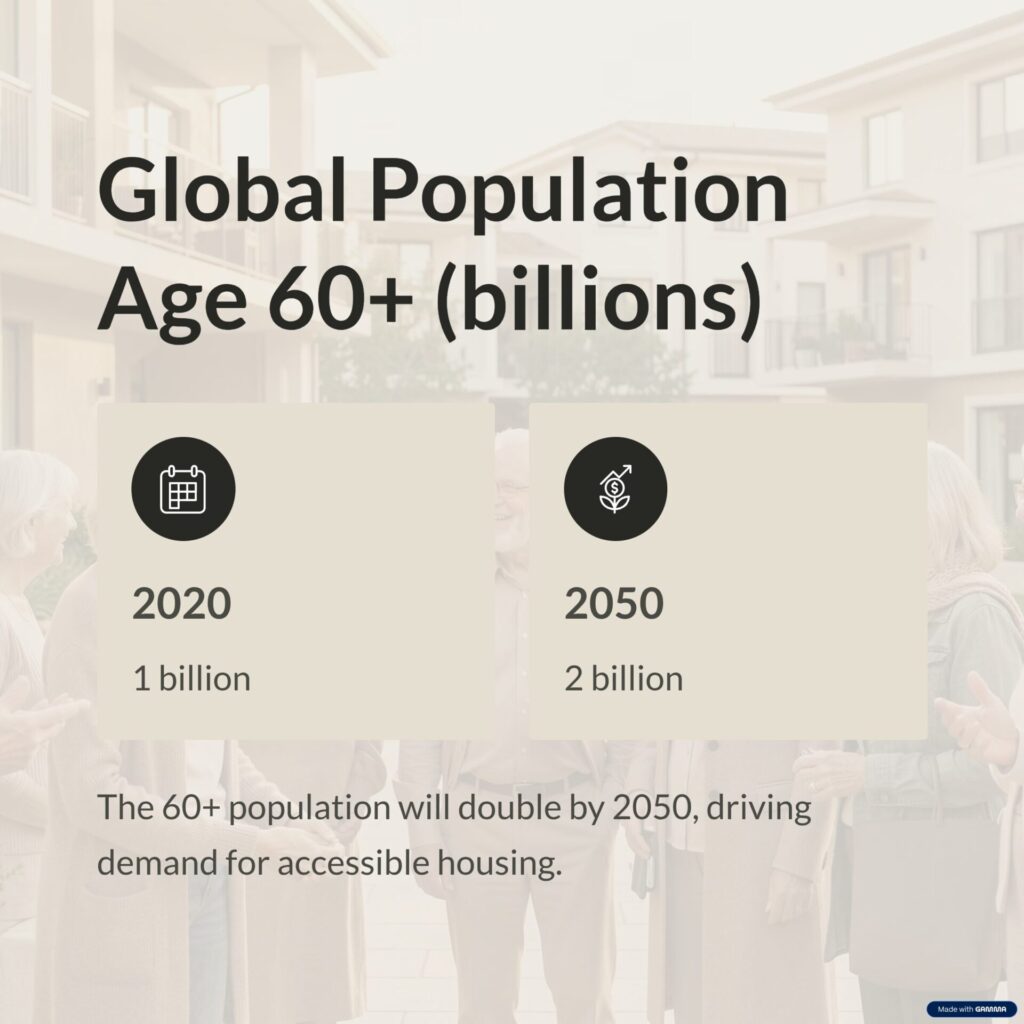
The concept has gained significant traction as the population ages. According to the World Health Organization, the number of people aged 60 and older worldwide will more than double to around 2 billion by 2050. And surveys consistently show that staying home is what people want: approximately 75-80% of adults over 50 would prefer to remain in their homes as they age.
Why So Many Homeowners Are Choosing to Stay Home
The preference for aging in place isn’t just emotional. There are practical financial and quality-of-life reasons that make it an attractive option.
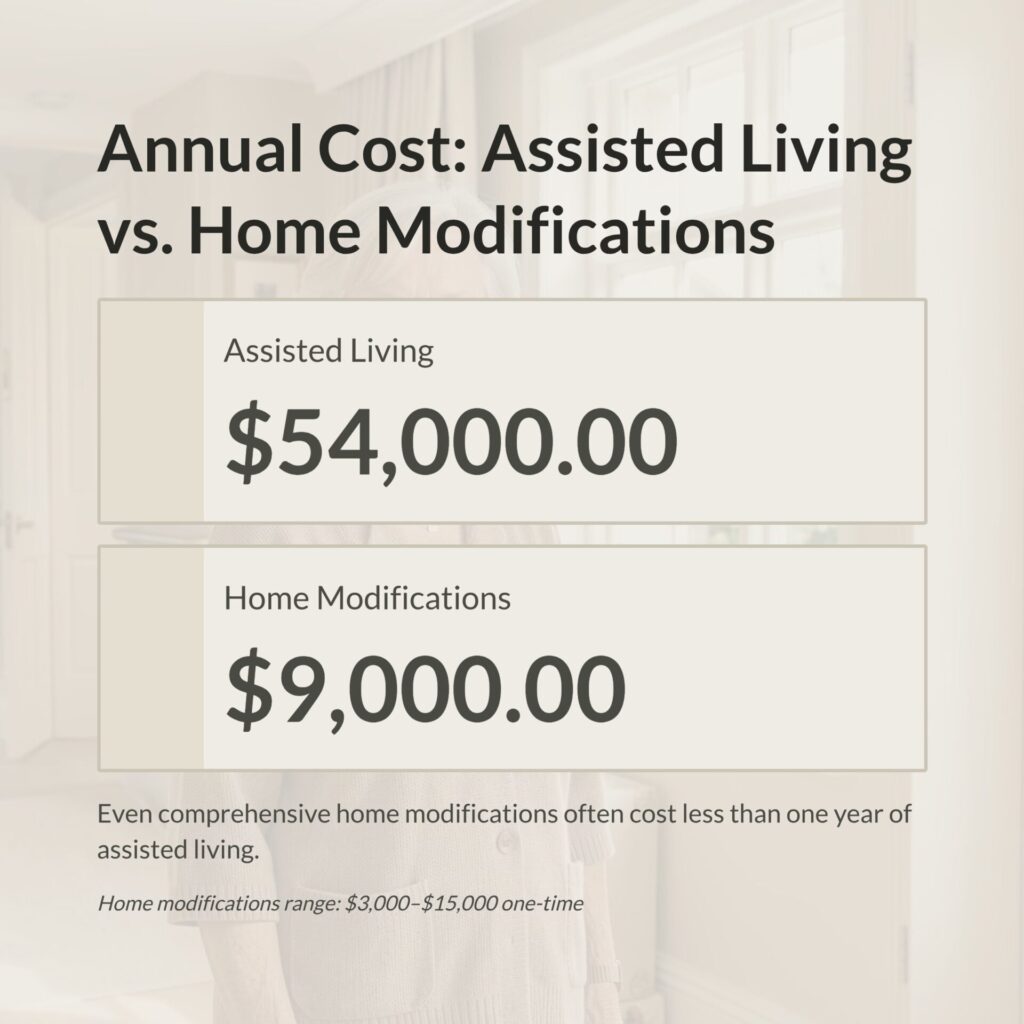
Cost comparison. The average assisted living facility costs around $4,500 per month, according to Genworth’s Cost of Care Survey. That’s $54,000 annually. By contrast, adapting a home for aging in place typically costs a one-time investment of $3,000 to $15,000 for basic modifications. Even more extensive renovations often cost less than a single year of assisted living.
Emotional wellbeing. Research consistently shows that seniors feel happier and more secure in their own homes. One survey found that 84% of seniors say they feel happier at home than they would elsewhere. Living in familiar surroundings filled with personal memories provides comfort that institutional settings can’t replicate.
Independence and dignity. Aging in place allows people to maintain their routines, stay connected to their community, and preserve their sense of autonomy. For many older adults, the ability to make their own decisions about daily life is deeply important.
Avoiding major life disruption. Moving in later years involves significant stress: sorting through decades of possessions, leaving neighbors and community connections, adapting to an unfamiliar environment. Modifying your existing home avoids this upheaval entirely.
Common Challenges in Homes Not Designed for Aging
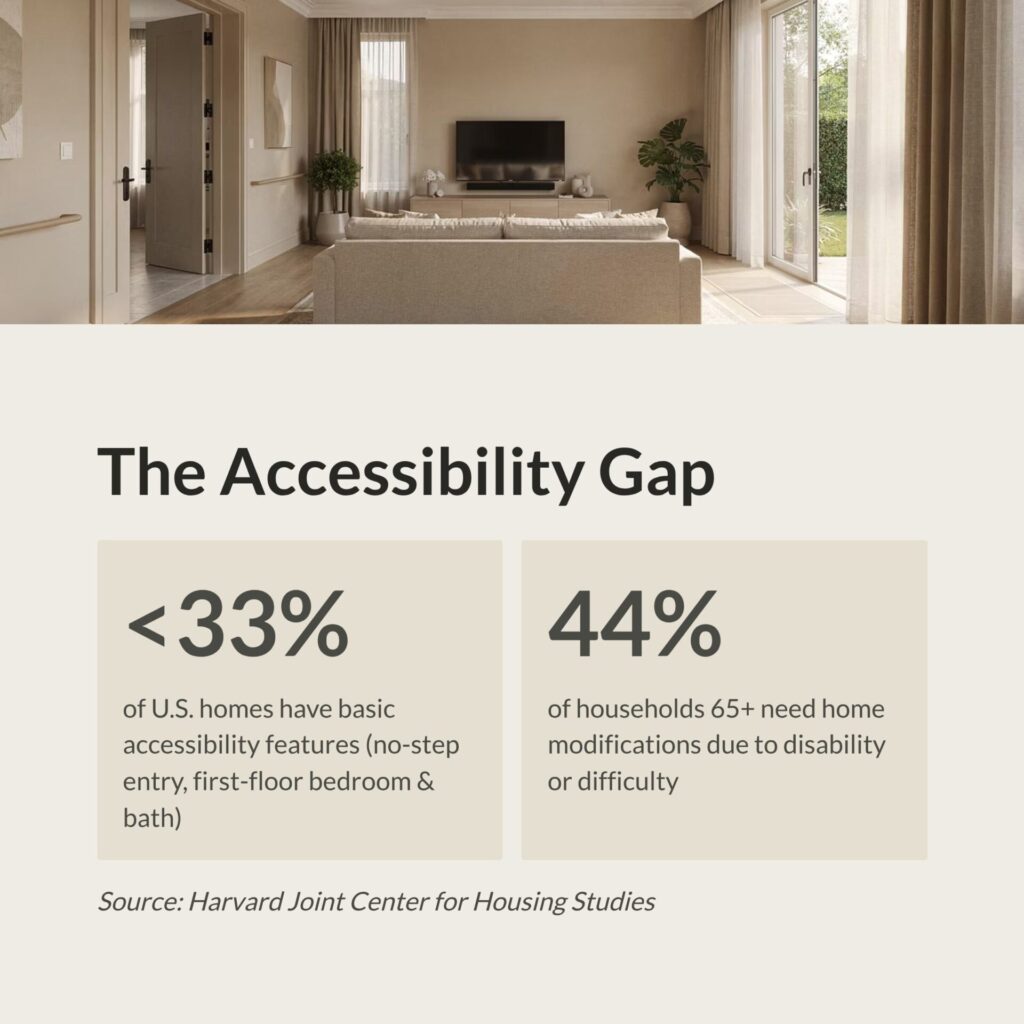
The problem is that most American homes weren’t built with aging occupants in mind. According to Harvard housing research, “not even a third of homes have what could be considered basic accessibility features, such as a no-step entry and a bedroom and full bathroom on the entry level.”
Meanwhile, nearly 44% of households age 65 and older have some need for home modifications due to disability or difficulty using parts of the home. The gap between what homes offer and what aging occupants need is substantial.
Falls are the biggest risk. Falls are the leading cause of injury-related death among older adults, and bathrooms and stairways are the most dangerous areas. Slippery floors, high tub walls, inadequate lighting, and stairs without proper handrails create hazards that become more dangerous as balance and strength decline.
Accessibility barriers multiply. What seems like a minor inconvenience at 50 can become a serious obstacle at 75. Narrow doorways won’t accommodate walkers or wheelchairs. Standard-height toilets become difficult to use with bad knees or hips. Round doorknobs are hard to grip with arthritic hands. High shelves and deep cabinets require reaching and bending that becomes challenging.
The status quo isn’t sustainable. A 2021 AARP survey found that 43% of people over 50 believe their current home would need modifications to be safe and accessible for aging. Yet surprisingly few homeowners proactively make these changes in advance.
Planning Your Aging in Place Remodel
The best time to plan an age-friendly remodel is before urgent needs arise. Early planning gives you control over the process, lets you budget and phase improvements over time, and means you’re making decisions while you’re still active and able rather than under pressure during a health crisis.
Start with an Assessment
Walk through your home and evaluate it with aging in mind. Consider your health and mobility, both current and anticipated. If you have arthritis, think about lever handles. If there’s a history of heart issues or diabetes, anticipate that stairs might become harder over time.
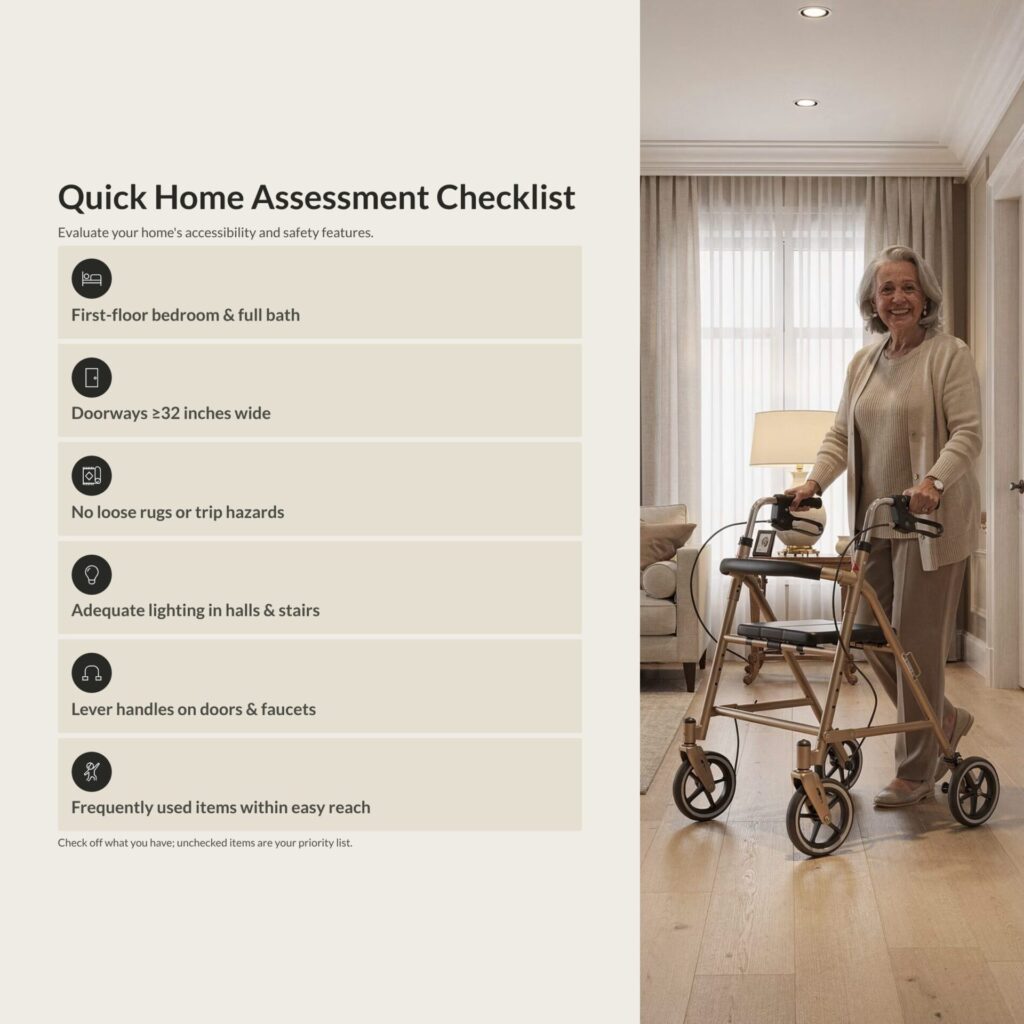
Key questions to ask:
- Is there a bedroom and full bathroom on the first floor?
- Are doorways wide enough for a walker or wheelchair (at least 32 inches)?
- Are there trip hazards (loose rugs, uneven thresholds, clutter)?
- How is the lighting in hallways, stairs, and bathrooms?
- Can you easily operate doors, faucets, and switches?
- Are frequently used items accessible without reaching or bending?
Consider having a professional assessment. Occupational therapists and Certified Aging-in-Place Specialists (CAPS) are trained to identify problems you might miss and recommend solutions that match your specific needs.
Prioritize Critical Safety Upgrades
Not all modifications are equally important. Focus first on changes that prevent the most serious potential injuries:
- Bathroom safety (grab bars, non-slip flooring, adequate lighting)
- Stair safety (handrails on both sides, good lighting, marked edges)
- Fall prevention throughout (remove loose rugs, improve lighting, eliminate trip hazards)
- Emergency access (ensure you can call for help from anywhere in the home)
After addressing critical safety issues, move to accessibility improvements (wider doorways, first-floor living options) and then convenience upgrades (easier-to-use hardware, better storage solutions).
Consider Universal Design Principles
Universal design means creating spaces that work for people of all ages and abilities. These features integrate seamlessly and often look like normal design choices, yet they make the space easier for everyone: young children, adults carrying groceries, and seniors with walkers alike.
Examples include flush thresholds, wider doors, good lighting, lever handles, and curbless showers. When you’re renovating anyway, incorporating these elements costs little extra and provides lasting value. If you’re rebuilding or doing major work, consider structural preparations like reinforcing walls for future grab bars or framing a closet that could convert to an elevator shaft if ever needed.
Key Modifications by Area
Different areas of your home present different challenges. Here’s what to consider in each space.
Bathroom Safety Modifications
Bathrooms are among the most hazardous spaces for falls. Wet floors, awkward movements getting in and out of tubs, and the need to reach and bend create multiple risks.
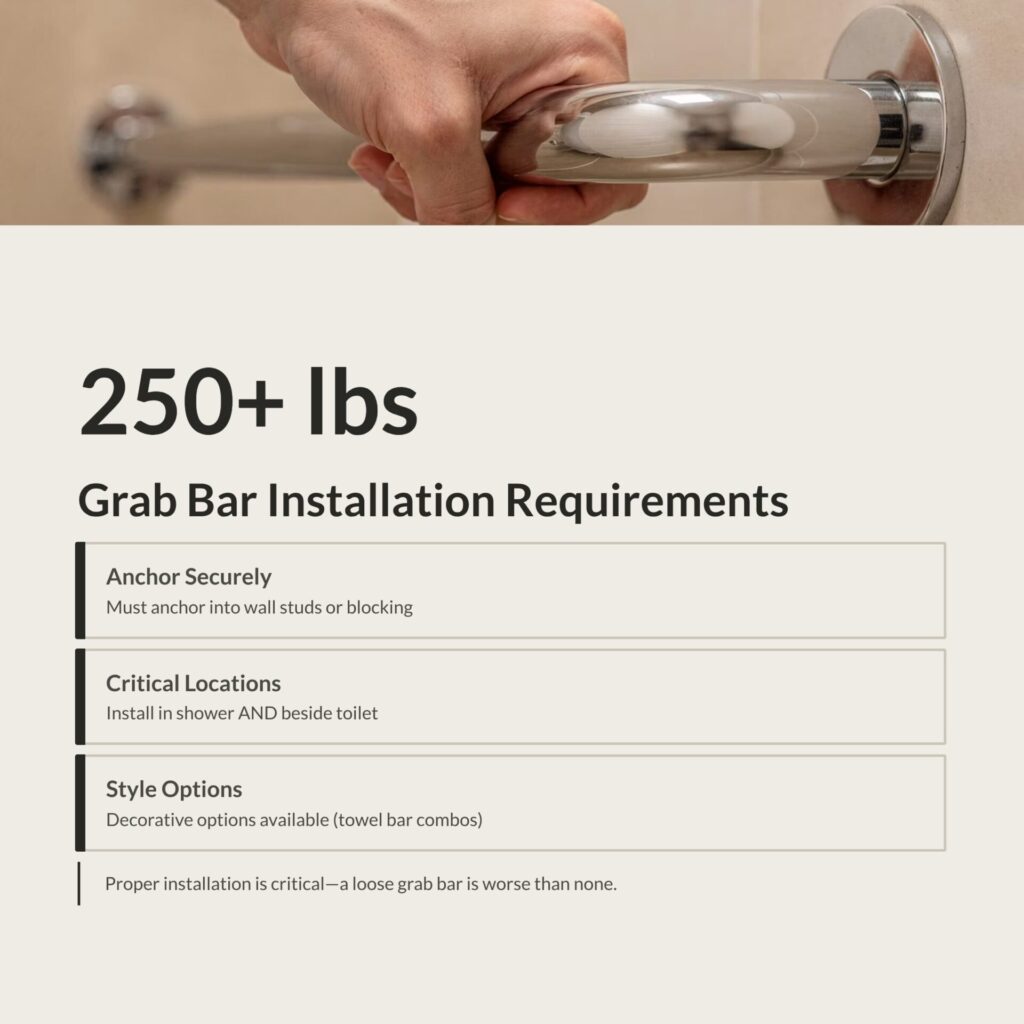
Grab bars. Install sturdy grab bars in the shower and beside the toilet. These must be secured into wall studs or blocking to support 250+ pounds. Decorative grab bars that double as towel bars are available if aesthetics matter.
Curbless showers. A walk-in shower with no threshold to step over eliminates one of the most common fall points. Include a fold-down seat and a handheld showerhead on a long hose so you can bathe while seated. Aim for at least 36 inches of width for wheelchair access.
Non-slip flooring. Use textured tile or apply slip-resistant treatments to existing floors. Avoid highly glossy surfaces that become slippery when wet.
Comfort-height toilets. Standard toilets are about 15 inches high. Comfort-height models (17-19 inches) make sitting down and standing up much easier on knees and hips. Alternatively, add a raised toilet seat.
Adequate space. If possible, ensure at least a 5-foot turning radius for wheelchair maneuvering. This may require repositioning fixtures or expanding the bathroom.
For more ideas specific to your situation, our guide to bathroom remodeling covers the full range of options.
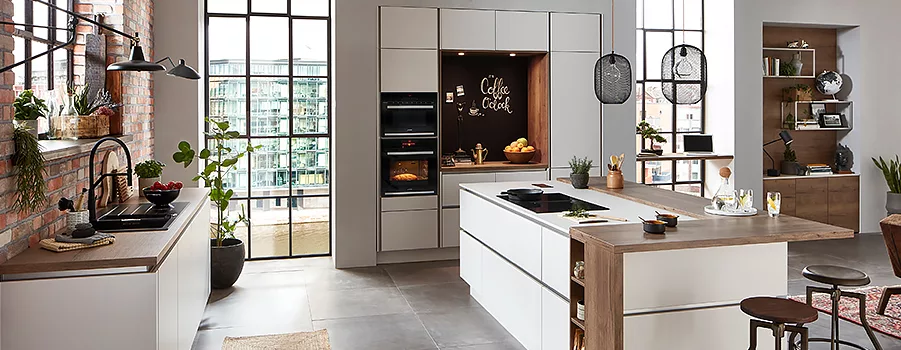
Kitchen Accessibility Updates
Standard kitchens assume a standing adult with full reach and strength. As those assumptions change, so should the kitchen.
Counter height variety. Create work surfaces at different heights so you can work while seated at some of them. Ensure open knee clearance under at least one section.
Accessible storage. Keep frequently used items between waist and shoulder height. Install pull-out shelves in lower cabinets so you can reach contents without kneeling or bending deep into the cabinet. Consider pull-down shelving for upper cabinets.
Easy-grip hardware. Replace small knobs with D-shaped pulls or loop handles that are easier to grasp. This applies to cabinets, drawers, and appliances.
Appliance choices. Side-by-side refrigerators are easier to access from a wheelchair than top-freezer models. Wall ovens with side-swing doors eliminate leaning over a hot surface. Induction cooktops won’t start fires if left on.
Clear floor space. Maintain at least 30″ × 48″ of clear space in front of appliances and work areas, and try to keep a 60-inch turning circle available.
Our kitchen remodeling services can incorporate any of these modifications into a comprehensive design.

Entry and Stair Modifications
Getting in and out of the house and navigating between floors are fundamental to daily life.
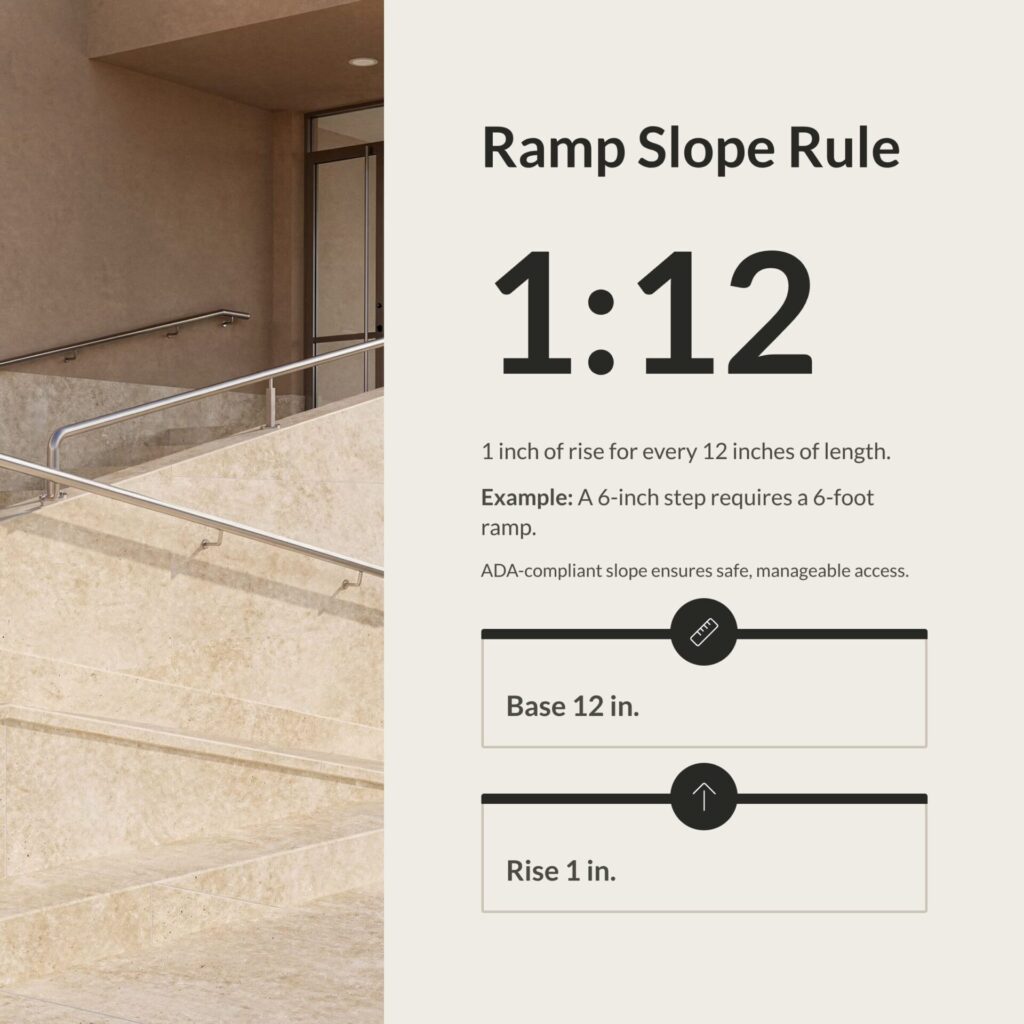
No-step entry. At least one entrance should have no steps. This might mean installing a ramp, re-grading an entryway, or adding a concrete pad to level an existing entrance. If a ramp is needed, ensure proper slope (no more than 1 inch rise per 12 inches of length) and sturdy handrails.
Covered entryways. A porch, awning, or canopy protects you from weather while unlocking the door. A shelf or bench provides a place to set packages or sit while managing keys.
Stair safety. Install handrails on both sides of every staircase. Improve lighting so each step is clearly visible. Add contrast strips or colored tape on step edges to make depth perception easier.
Stair alternatives. If climbing stairs is difficult, a motorized chair lift can carry you up and down. For those who need to eliminate stairs entirely, consider relocating the main bedroom to the ground floor or planning for a residential elevator if space and budget allow.
Hallways and Doorways
Moving through the house should be easy with any mobility aid.
Doorway width. Doorways should offer at least 32 inches of clear width (which typically means a 36-inch door). Standard interior doors are often only 28-30 inches. If widening isn’t practical, swing-clear hinges can add a few inches of usable width.
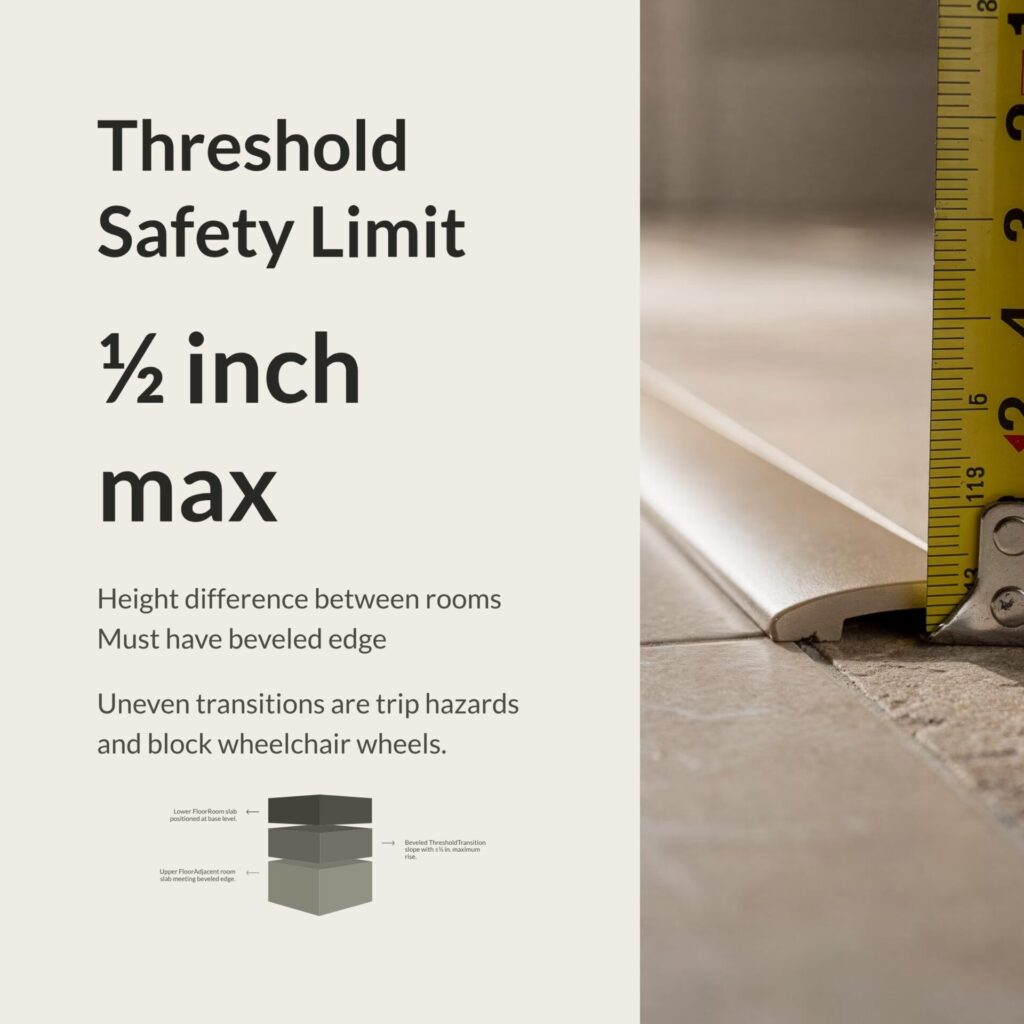
Threshold transitions. Floor transitions between rooms should be as flush as possible, with a maximum height difference of 1/2 inch and a beveled edge. Uneven transitions are trip hazards and obstacles for wheelchairs.
Lever handles. Replace round doorknobs with lever handles throughout the house. These can be operated with a simple downward push, even with weak grip or using an elbow.
Hallway width. Hallways should be at least 36 inches wide and free of clutter. Remove furniture or decorations that narrow the path.
Lighting and Electrical Upgrades
Aging eyes need more light to see contrasts clearly. Good lighting throughout the home prevents accidents and makes daily tasks easier.
Brighter ambient lighting. Install bright, evenly distributed lighting in all rooms. Avoid harsh shadows that can obscure obstacles.
Task lighting. Add extra lighting in work areas like kitchen counters, reading chairs, and desks.
Easy-to-use switches. Replace small toggle switches with rocker or touch switches that are easier to operate. Install switches at 42-48 inches high for easier reach. Illuminated switch plates help you find controls in the dark.
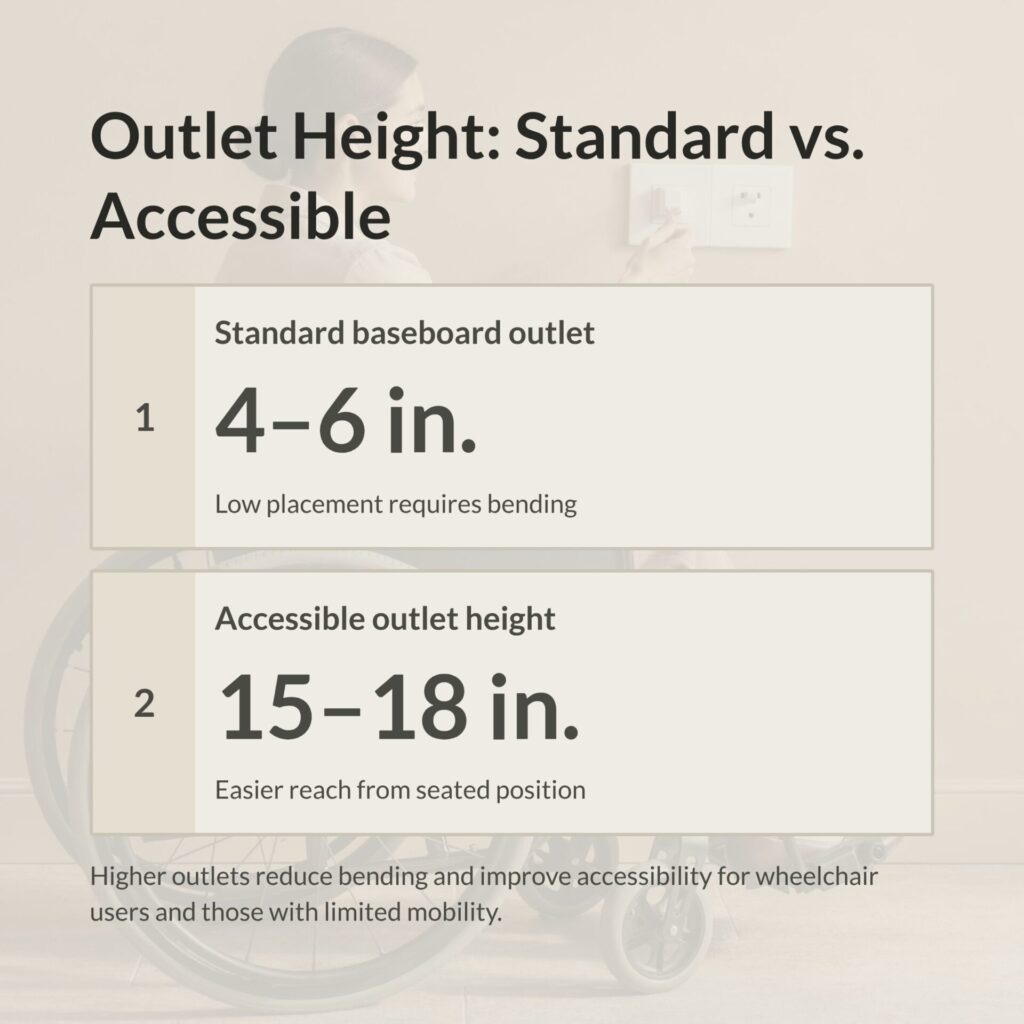
Higher outlets. Place electrical outlets 15-18 inches from the floor rather than at baseboard level. This reduces bending to plug things in. Add outlets or USB charging ports in convenient locations like beside the bed and at tables.
Night lighting. Install automatic night-lights in hallways, bedrooms, and bathrooms. Motion-activated lights guide the way when you get up at night without requiring you to find a switch.
Flooring Throughout the Home
Floor surfaces affect both safety and mobility.
Non-slip surfaces. Choose flooring with some texture or use anti-slip treatments. Avoid highly polished or glossy finishes that become slippery when wet.
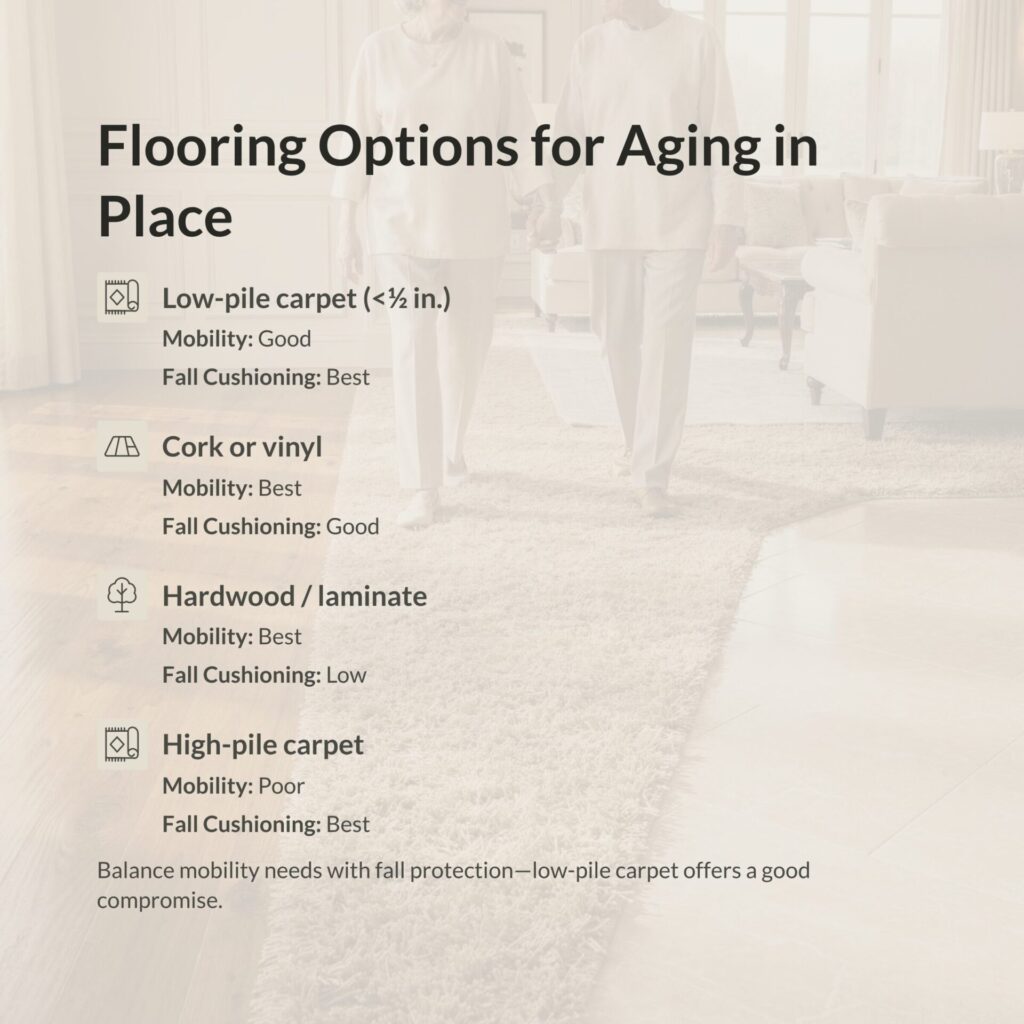
Low-pile carpet. If you prefer carpet, choose low-pile (under 1/2 inch) with firm padding. Thick plush carpets make wheelchair and walker movement difficult. However, some carpet can be beneficial because it cushions falls better than hard surfaces.
Remove loose rugs. Throw rugs and decorative rugs are common tripping hazards. Remove them or secure them completely with double-sided tape or non-slip backing.
Smooth transitions. Ensure flooring transitions between rooms are smooth and level. Thick transition strips can catch feet or obstruct wheels.
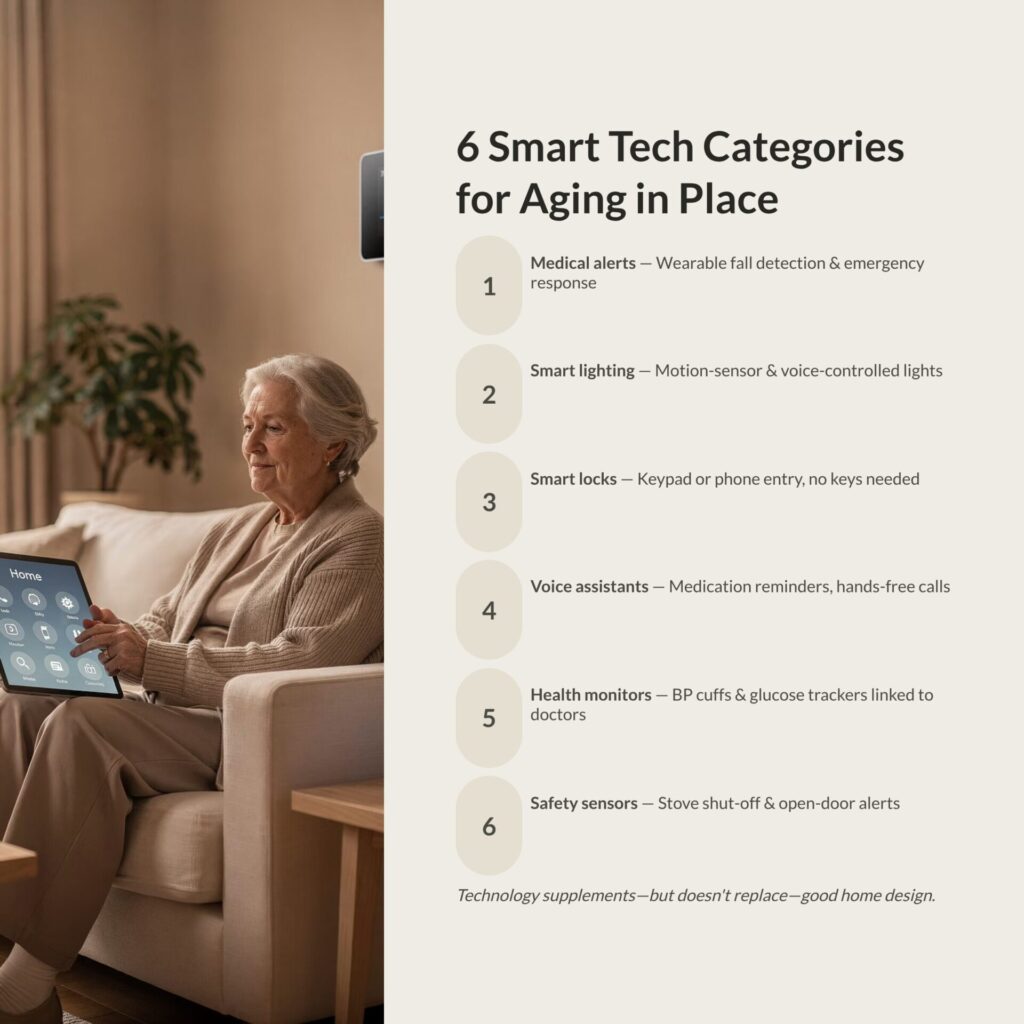
Smart Home Technology That Supports Independent Living
Modern technology can add a safety net and increase convenience for seniors living independently.
Medical alert systems. Personal emergency response devices can be worn as pendants or wristbands. When activated, they connect you to monitoring services that can send help. Some include fall detection that triggers automatically.
Smart lighting. Motion-sensor lights turn on automatically when you enter a room. Voice-controlled systems let you turn lights on or off without getting up or finding a switch.
Smart doorbells and locks. Video doorbells let you see who’s at the door without rushing to answer it. Smart locks can be opened via keypad or phone, which helps if dexterity issues make keys difficult.
Voice assistants. Devices like Amazon Echo or Google Nest can set medication reminders, make phone calls by voice, answer questions, and control other smart devices throughout the home.
Remote health monitoring. Devices like blood pressure cuffs and glucose monitors can track health data and share it with healthcare providers, enabling proactive care while you remain at home.
Safety sensors. Stove shut-off devices can turn off burners if no motion is detected for a set period. Door sensors can alert family members if an exterior door is left open.
Technology supplements good design but doesn’t replace it. The foundation of aging in place is a well-adapted physical space.
Cost Considerations and Return on Investment
Aging-in-place modifications vary widely in cost depending on scope.
Modification Type | Typical Cost Range |
Basic safety upgrades (grab bars, non-slip mats, better lighting) | $500 - $2,000 |
Moderate modifications (comfort-height toilet, lever handles, handrails) | $2,000 - $5,000 |
Bathroom renovation (curbless shower, grab bars, accessible layout) | $10,000 - $30,000+ |
Kitchen accessibility updates | $5,000 - $25,000+ |
Doorway widening (per door) | $500 - $2,500 |
Ramp installation | $1,000 - $8,000 |
Stair lift | $3,000 - $15,000 |
Residential elevator | $20,000 - $50,000+ |
Comparing to alternatives. Even comprehensive modifications costing $50,000 would equal less than one year of assisted living at average rates. And unlike monthly facility costs that continue indefinitely, home modifications are a one-time investment.
Financial assistance. Some government programs, grants, or tax credits may help with aging-in-place modifications depending on your location. Check with local senior services or housing agencies for programs in your area. Some states offer property tax exemptions for accessibility improvements.
Financing options. If cash isn’t available, options include home equity loans, HELOCs, or reverse mortgages. However, weigh these decisions carefully given the long-term implications.
Prevention value. Beyond the direct comparison to care facilities, home modifications can prevent costly medical expenses. Falls result in emergency room visits, hospitalizations, and rehabilitation that quickly add up. A $200 grab bar could prevent a $30,000 hip replacement.
When to Work with a Professional
Some aging-in-place modifications are straightforward DIY projects. Installing grab bars, adding non-slip mats, and replacing doorknobs are manageable for handy homeowners.
However, professional help makes sense when:
- Structural changes are needed (widening doorways, installing ramps, modifying layouts)
- Plumbing or electrical work is involved
- Multiple modifications need to be coordinated into a cohesive design
- You want an expert assessment of what changes would be most beneficial
- You’re combining aging-in-place features with a larger remodel
Look for specialized expertise. Certified Aging-in-Place Specialists (CAPS) are contractors and designers trained specifically in senior-friendly design. They understand the unique requirements and can recommend solutions you might not think of.
At Boss Design Center, our team includes Aging-in-Place Specialists who can assess your home and recommend modifications that address both immediate needs and anticipated future requirements. We offer free home assessments to help you understand what changes would make the biggest difference.
For larger projects involving multiple spaces or significant construction, our whole-house remodeling approach ensures all the modifications work together as a cohesive design.
Start Planning Now
The best time to prepare your home for aging is before you urgently need to. Early planning means you can:
- Budget and phase improvements over time
- Make decisions while you’re active rather than during a health crisis
- Incorporate modifications into other renovations for better value
- Take your time to research options and make good choices
As one gerontologist advises, “Every year when you do your spring cleaning, maybe take one step in making your house age-friendly.” That might mean adding grab bars this year, improving lighting next year, and addressing doorway widths the year after. Small, consistent progress adds up.If you’re in the Washington D.C. metro area and want to discuss how to make your home safer and more accessible for the years ahead, contact Boss Design Center to schedule a free home assessment. Our Aging-in-Place Specialists can help you identify priorities and create a plan that fits your timeline and budget.
AUTHOR