
Basement Egress Window Requirements: What Homeowners Need to Know
A basement egress window is a window large enough for people to escape through and emergency responders to enter during a fire or other crisis. Building codes across the United States require egress windows in any basement used as living space, particularly in bedrooms. The minimum requirements include a net clear opening of at least 5.7 square feet, a minimum width of 20 inches, a minimum height of 24 inches, and a sill height no more than 44 inches from the floor.
At Boss Design Center, we’ve completed dozens of basement finishing projects throughout the D.C. metro area, and egress windows are one of the first considerations we address with homeowners. The reasoning is straightforward: without proper egress, a finished basement bedroom isn’t legally a bedroom, and more importantly, it can become a dangerous trap in an emergency.
This guide covers everything you need to know about egress window requirements, from exact code specifications to window well dimensions and installation costs.
Why Building Codes Require Egress Windows
Basements present a unique safety challenge. They’re below grade, typically have limited exits, and if a fire blocks the stairway, anyone downstairs could be trapped. An egress window provides two things: a way out for occupants and a way in for firefighters.
The International Residential Code (IRC) mandates that every sleeping room must have at least one emergency escape and rescue opening that leads directly outside. This applies to basement bedrooms just as it does to bedrooms on upper floors. If you finish a basement and add a bedroom without proper egress, you’re violating fire safety standards and creating a code violation that can cause problems when you sell your home.
Beyond safety compliance, egress windows offer practical benefits:
- Natural light and ventilation in an otherwise dark space (codes typically require window glass area of at least 8% of floor area for light and 4% for ventilation)
- Increased property value because a basement bedroom with proper egress counts as a legal bedroom
- Meeting habitability requirements that make the space comfortable for daily use
Minimum Size Requirements for Egress Windows
For a window to qualify as an egress window, it must meet specific size criteria when fully open. These aren’t suggestions; they’re legal minimums designed to ensure an adult or a firefighter in full gear can pass through.
| Requirement | IRC Minimum |
| Net Clear Opening Area | 5.7 sq ft (820 sq in) |
| Minimum Width | 20 inches |
| Minimum Height | 24 inches |
| Maximum Sill Height | 44 inches from floor |
One common mistake: assuming that meeting the minimum width and height automatically satisfies the area requirement. A window that opens to exactly 20 inches wide by 24 inches tall provides only 3.3 square feet of opening, well below the 5.7 square foot minimum.
In practice, a casement egress window typically needs an opening around 28 inches by 41 inches to meet the area requirement. Sliding windows need to be even larger because only one sash opens.
Grade-Level Exception: If your basement window opens at ground level (such as in a walkout basement), codes allow a slightly smaller 5.0 square foot opening. This exception recognizes that ground-level windows are easier to escape from.
Window Operation Requirements
The IRC requires that egress windows open from the inside without keys, tools, or special knowledge. In an emergency, anyone in the basement, including children and guests unfamiliar with the house, must be able to open the window quickly.
This means:
- No padlocks or keyed locks on the window itself
- No permanent bars or grilles that block the opening
- If security bars are installed, they must have a quick-release mechanism operable from inside without tools
Window Well Requirements
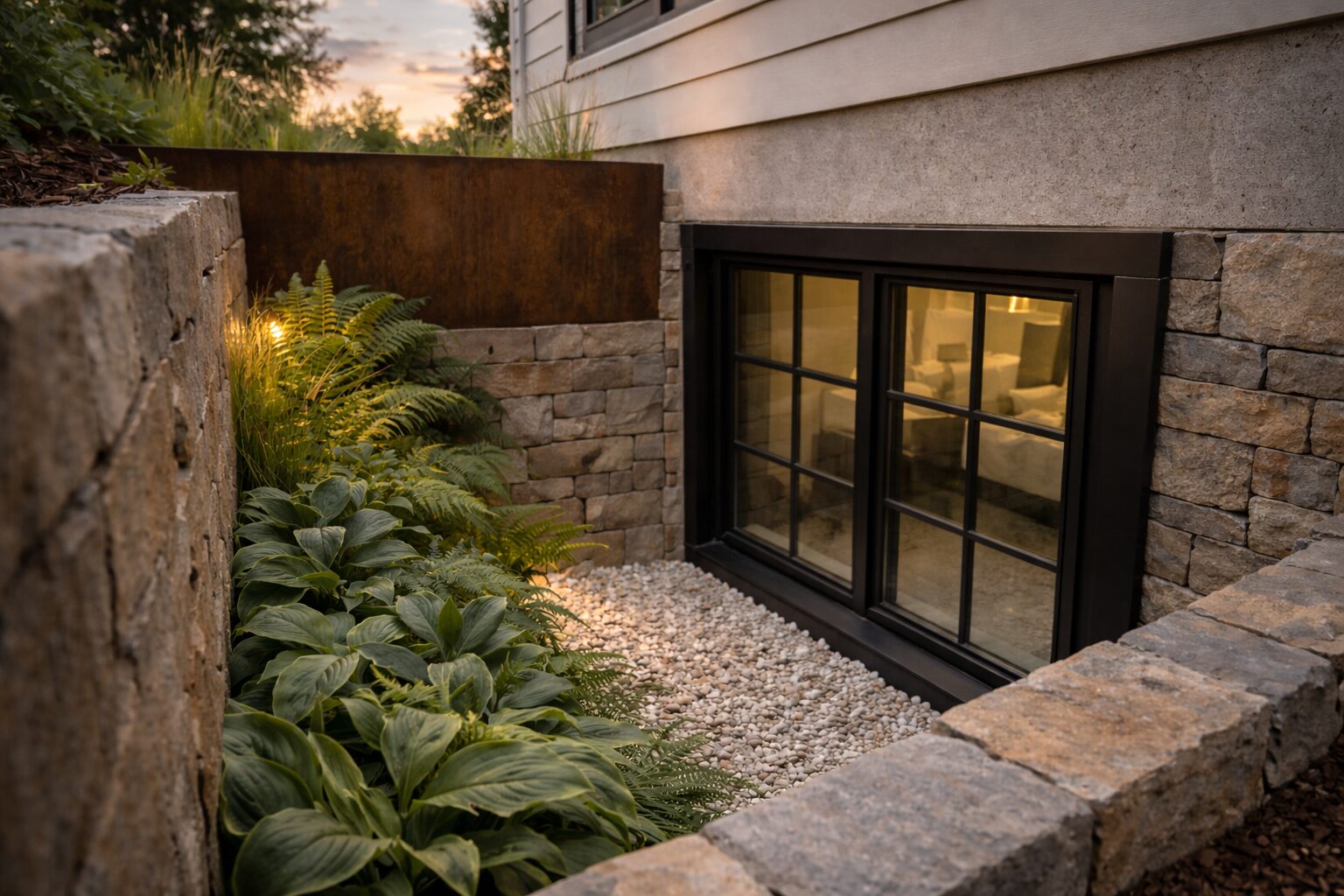
Most basement egress windows sit below grade, which means they need a window well on the exterior. A window well is an excavated space lined with a retaining wall (metal, plastic, or concrete) that creates clearance for the window to open and for a person to climb out.
Window wells have their own code requirements:
| Requirement | Minimum Specification |
| Floor Area | 9 sq ft minimum |
| Width | 36 inches clear |
| Projection from Window | 36 inches minimum |
| Ladder Required | If well depth exceeds 44 inches |
Ladder and Step Requirements
If your window well is deeper than 44 inches from grade to the bottom, you need a permanently attached ladder or steps. The ladder specifications include:
- Rungs spaced no more than 18 inches apart
- Each rung at least 12 inches wide
- Rungs projecting 3 to 6 inches from the wall
- Ladder cannot encroach more than 6 inches into the required 36-inch clear width
Window Well Covers
If you install a cover or grate over the window well to keep out debris, rain, or snow, it must be easily removable from inside the well without tools or keys. Many covers are designed with spring-loaded hinges or slide-open mechanisms that allow someone inside to push them open.
Drainage Considerations
A flooded window well creates two problems: it can leak water into your basement, and it can block escape during an emergency. Proper drainage is essential.
Standard practice includes:
- A 6 to 12 inch layer of gravel at the bottom of the well
- A drain pipe connected to your foundation’s footing drain or a dry well
- Proper grading around the well to direct surface water away
Installation Costs
Adding an egress window involves cutting through your foundation wall and excavating around the exterior. It’s not a casual weekend project.
According to This Old House, national averages for professional installation range from $2,700 to $5,800 per window, with the average around $4,200. In our experience with basement remodeling projects in Maryland, egress window installation typically runs around $2,785 for the unit and installation.
Factors that affect cost include:
- Window size and type
- Foundation material (concrete block vs. poured concrete)
- Excavation and landscaping requirements
- Window well materials and accessories
- Local permit fees
DIY installation can reduce costs, but mistakes in cutting the foundation or waterproofing can be expensive to correct.
Permits and Inspections
Most jurisdictions require a permit for egress window installation because it involves altering your home’s structure. The permit process typically includes plan review and one or more inspections.
Getting a permit isn’t just about following rules. An inspected installation ensures the work meets code, which protects you when selling your home. A basement bedroom without a permitted egress window can derail a sale or reduce your appraised value because inspectors and appraisers won’t count it as a legal bedroom.
Frequently Asked Questions
Does every basement need an egress window?
Not necessarily. Egress windows are required in basements that contain bedrooms or sleeping areas. If your basement is used only for storage or mechanical equipment, an egress window isn’t mandatory under most codes. However, if you finish the space for habitable use, particularly as a bedroom, you’ll need at least one egress window serving that space.
Can I use an exterior door instead of an egress window?
Yes. Building codes require an “emergency escape and rescue opening,” which can be either a window or a door that opens directly to the outside. A walkout basement with an exterior door typically satisfies this requirement without needing an additional egress window in that space.
What if my existing basement window is too small?
You have two options: enlarge the existing opening to accommodate an egress-compliant window, or install a new egress window in a different location. Both involve cutting into the foundation, so the costs are similar. The choice often depends on the existing layout and where a window well can be practically installed outside.
Are there exceptions for older homes?
Grandfathering varies by jurisdiction. Many codes apply egress requirements only when you finish a basement or create a new bedroom, not retroactively to existing spaces. However, if you’re finishing a basement in an older home, current code requirements apply to the new work. Check with your local building department for specifics.
Do I need an egress window if my basement has a sprinkler system?
Some jurisdictions allow reduced egress requirements in fully sprinklered buildings, but this exception is rare for residential basements. Even with sprinklers, most local codes still require egress windows in sleeping areas. Always verify with your local building official.
Getting Your Basement Project Started
Egress windows are one piece of the puzzle when finishing a basement, but they’re a non-negotiable piece. Beyond meeting code, they transform what would otherwise be a dark, enclosed space into something that feels open and safe.
If you’re planning a basement remodeling project in the D.C. metro area, we’d welcome the opportunity to discuss your plans. Our design process addresses egress requirements early, ensuring your finished space meets all codes while maximizing natural light and usable square footage.
Contact Boss Design Center to schedule a free consultation about your basement project.
AUTHOR