Whole house renovation in Northern Virginia typically costs between $200 and $500 per square foot, depending on the scope and finish level. For a 2,000-square-foot home, expect to invest $400,000 to $1,000,000 for a comprehensive transformation. At Boss Design Center, we’ve guided hundreds of homeowners through this process across McLean, Bethesda, Arlington, and Fairfax over the past decade, and the decision to renovate rather than move has become increasingly strategic in our market.
The Northern Virginia housing market creates unique conditions that make whole house renovation especially compelling. With mortgage rates significantly higher than the 3% many homeowners locked in years ago, the financial penalty of selling and buying a comparable home often exceeds the cost of a major renovation. Severe inventory shortages in desirable neighborhoods like Great Falls, North Arlington, and Potomac compound this challenge. As a result, staying and improving has evolved from a lifestyle choice into a sophisticated financial strategy.
This guide draws from our experience managing complex renovations throughout the DC metro area, including McLean, Bethesda, Arlington, and Fairfax. We’ll walk through realistic cost expectations, timeline planning, the permitting requirements specific to each jurisdiction, and the technical challenges common in our region’s housing stock. Whether you’re considering updating a 1940s Arlington colonial or transforming a 1990s Fairfax home, this information will help you plan and execute your project with confidence.
What is Whole House Renovation?
Whole house renovation involves transforming multiple spaces throughout your home to create a cohesive design and improve functionality. Unlike single-room remodels, these projects address your entire living environment. This includes updating kitchens and bathrooms, reconfiguring floor plans, and modernizing systems.
The scope varies significantly based on your home’s condition and your goals. At one end, a whole house renovation might involve cosmetic updates across all spaces while maintaining existing layouts. This includes new flooring, fresh paint, and updated fixtures. At the other extreme, a gut renovation strips the home down to studs, replaces all systems (electrical, plumbing, HVAC), and rebuilds from the inside out.
Most whole house renovations in Northern Virginia fall somewhere between these extremes. Common projects include:
- Kitchen and bathroom remodels
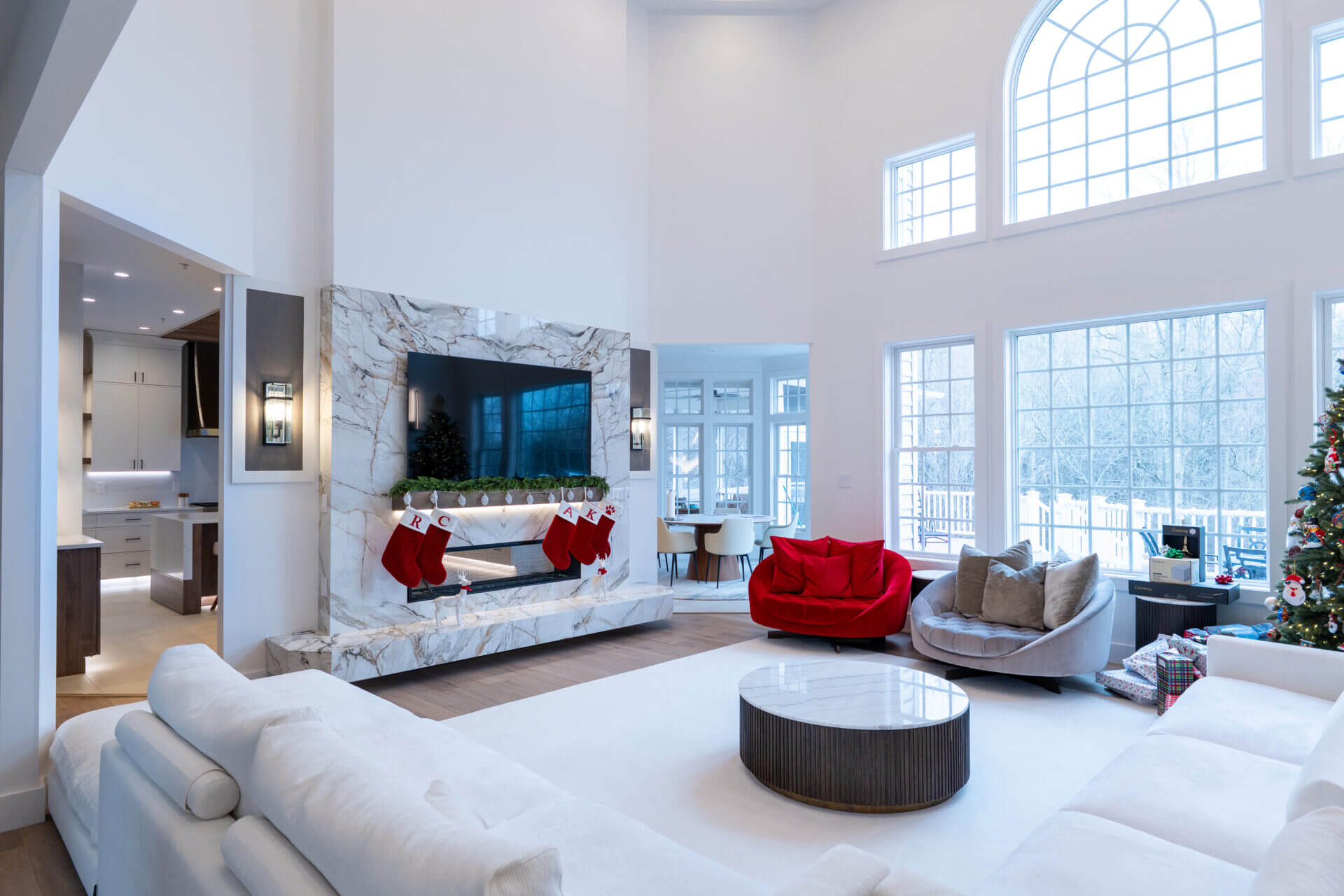
- Opening floor plans by removing non-structural walls
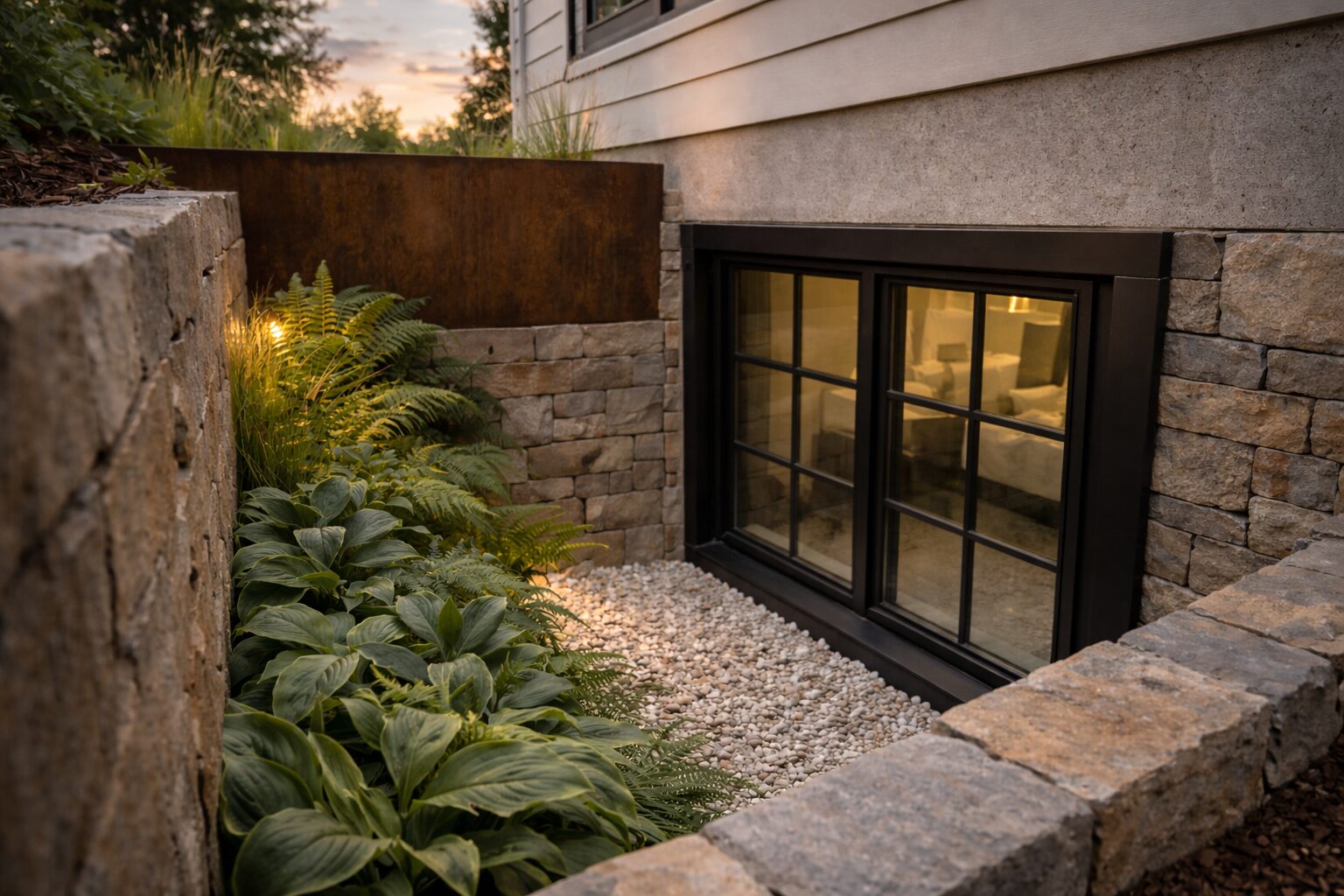
- Finishing or expanding basements
- Adding master suites or second stories
- Updating electrical panels and installing modern lighting
- Replacing windows and doors
- Refinishing or installing hardwood floors throughout
- Modernizing HVAC systems
The defining characteristic is comprehensive transformation. You’re not just fixing one problem area. You’re creating a unified vision that flows throughout your home.
What Does Whole House Renovation Cost in Northern Virginia?
Construction costs in the DC metro area run significantly higher than national averages. This “DMV premium” stems from three factors: competition for skilled labor (commercial data center projects absorb much of the workforce), rigorous regulatory requirements, and elevated material standards. What’s considered luxury elsewhere often registers as standard in Fairfax and Loudoun counties.
Cost Tiers Per Square Foot
Understanding where your project falls on the quality spectrum helps establish realistic budget expectations:

Value-Focused Renovation: $150 – $200 per square foot
This tier prioritizes functional updates over aesthetic luxury. We typically see this approach for rental properties or when homeowners need to address maintenance issues on a limited budget.
Scope includes cosmetic updates to existing layouts without structural changes. Materials consist of builder-grade finishes. This includes vinyl plank flooring, laminate or entry-level granite countertops, stock cabinetry, and fiberglass shower inserts. Existing plumbing locations remain unchanged, and electrical work involves standard updates without major panel upgrades.
For a 2,000-square-foot home, budget $300,000 to $400,000.
Mid-Range Custom Renovation: $200 – $325 per square foot
This represents the median standard for owner-occupied homes in our market. It balances personalization with resale value.
Scope includes moderate structural changes, such as removing non-load-bearing walls to create open-concept spaces. All bathrooms and the kitchen receive complete updates. Materials include hardwood floors (site-finished or high-end engineered), quartz or mid-tier granite countertops, semi-custom cabinetry with organizational inserts, tile showers with glass enclosures, and energy-efficient windows.
For a 2,000-square-foot home, budget $400,000 to $650,000.
Luxury Custom Renovation: $325 – $500+ per square foot
High-value zip codes like McLean (22101), Great Falls (22066), and North Arlington (22207) demand this level of finish to meet buyer expectations.
Scope includes extensive structural alterations such as additions, moving staircases, and digging out basements. Renovations often go down to the studs. Materials feature imported natural stone (marble, quartzite), custom architectural millwork, commercial-grade appliances (Wolf, Sub-Zero), custom European cabinetry, heated floors, and comprehensive smart home automation.
For a 2,000-square-foot home, budget $650,000 to $1,000,000 or more.
Project-Specific Cost Breakdowns
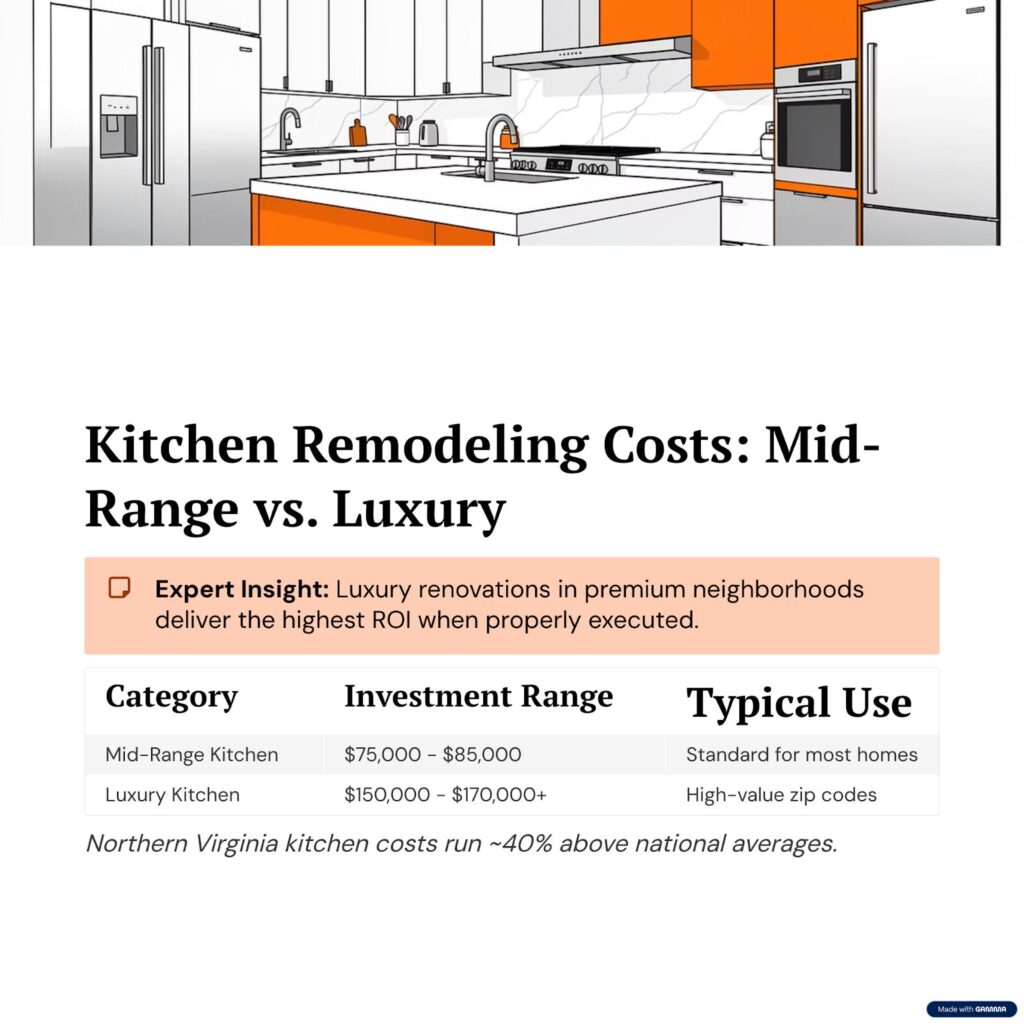
While square footage averages help with macro planning, specific spaces drive the budget:
| Space/Project | Mid-Range Cost | Upscale/Luxury Cost |
| Kitchen Remodel | $75,000 – $85,000 | $150,000 – $170,000+ |
| Master Bathroom | $24,000 – $30,000 | $78,000 – $85,000+ |
| Guest Bathroom | $15,000 – $20,000 | $35,000 – $45,000+ |
| Master Suite Addition | $155,000 | $316,000+ |
| Basement Finishing | $50,000 – $100,000 | $150,000+ |
| Second-Story Addition | $200,000 – $300,000 | $400,000+ |
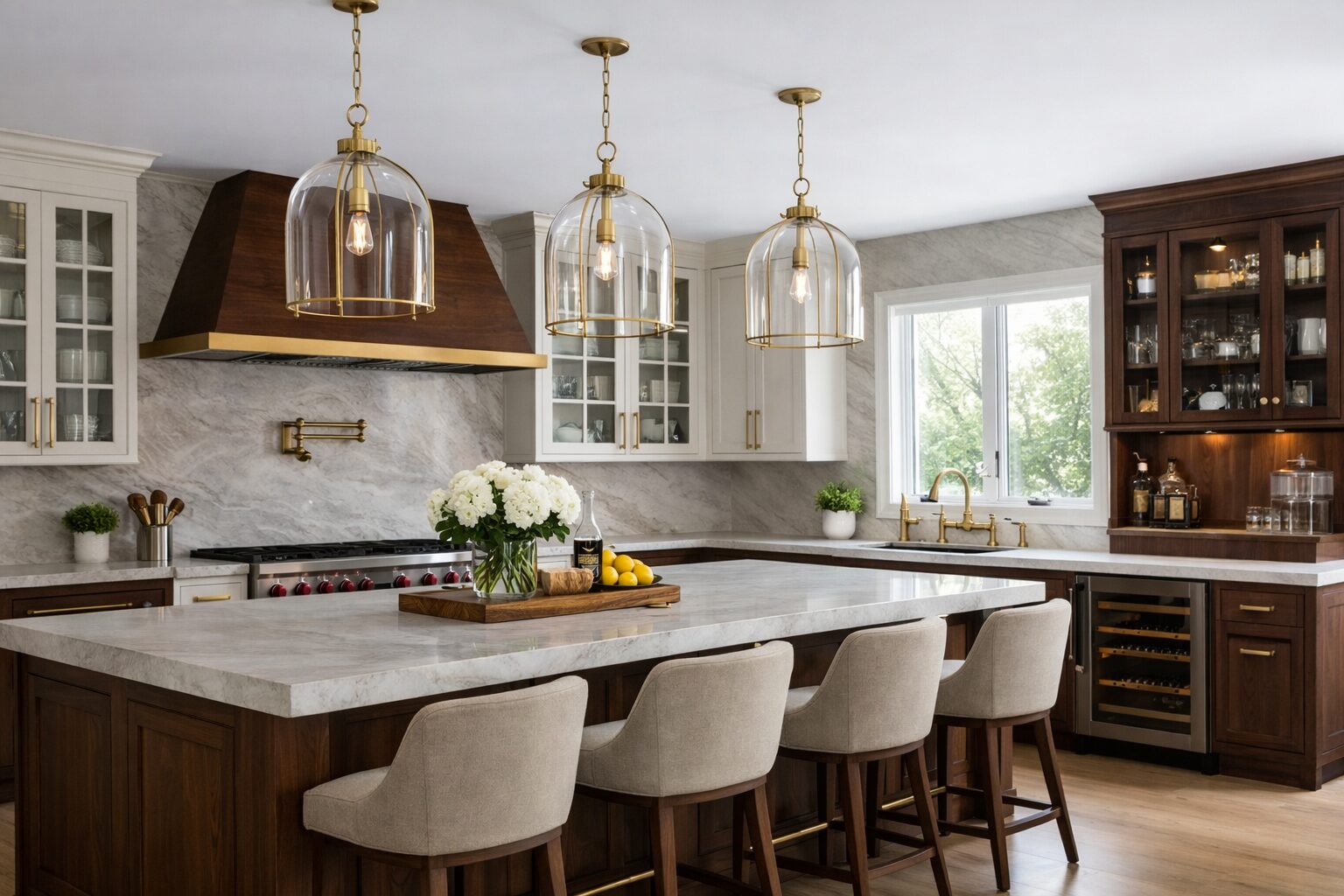
Kitchen remodeling represents the largest single investment in most whole house renovations. In our market, the average kitchen costs approximately $75,000. This is nearly 40% higher than the national average. Cabinetry alone accounts for roughly 30% of the kitchen budget, with labor and appliances each consuming another 20%.
Return on Investment Analysis
Understanding which projects offer the best financial return helps prioritize spending:
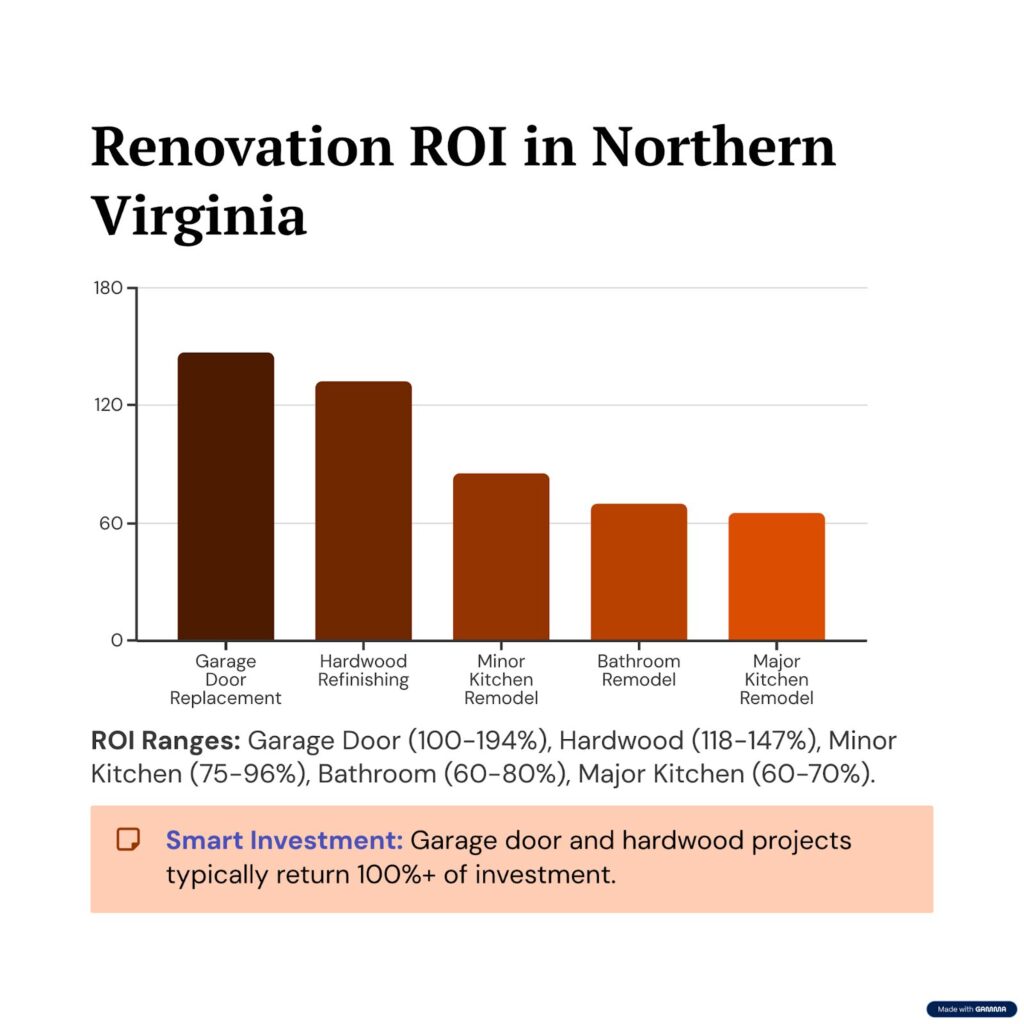
| Project Type | Typical ROI (NoVA) | Strategic Value |
| Garage Door Replacement | 100% – 194% | Highest ROI project; dramatically improves curb appeal |
| Hardwood Refinishing | 118% – 147% | NoVA buyers expect hardwood; refinishing existing floors costs far less than installation |
| Siding Replacement | 70% – 100% | Refreshes exterior and addresses maintenance issues |
| Minor Kitchen Remodel | 75% – 96% | Aesthetic updates often recoup more percentage-wise than gut remodels |
| Finished Basement | 70% – 75% | Adds gross living area without changing footprint |
| Major Kitchen Remodel | 60% – 70% | Lower percentage but essential for luxury home sales |
| Bathroom Remodel | 60% – 80% | Strong returns, especially for master baths |
These percentages can be misleading for high-end properties. In a $1.5 million McLean home, a dated kitchen may prevent the sale entirely or force price reductions exceeding renovation costs. For luxury properties, major remodels preserve the asset’s marketability.
Hidden Costs to Anticipate
We advise maintaining a contingency fund of 15% to 20% above the base contract price.
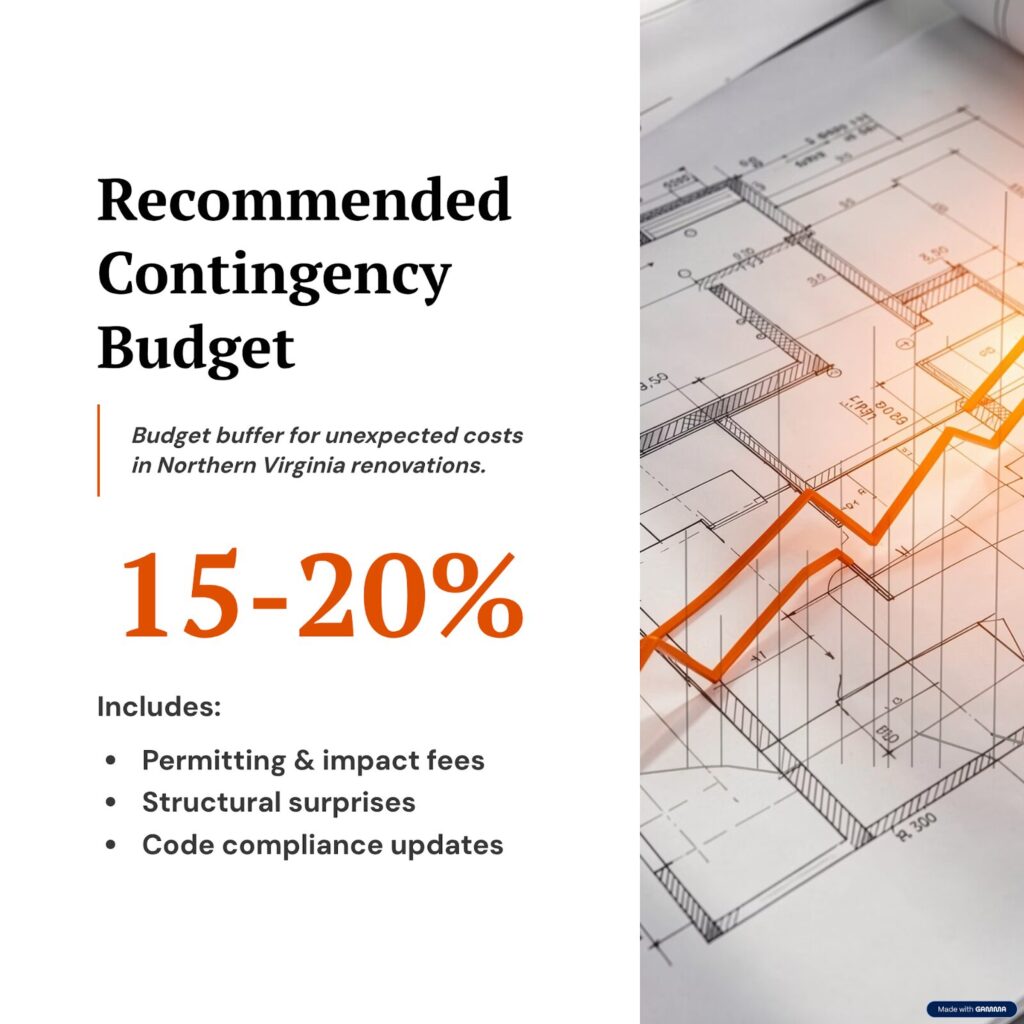
Unexpected costs are inevitable:
Permitting and Impact Fees: Beyond basic building permits, counties levy impact fees for additions or require expensive site plan revisions for stormwater management. Fairfax County implemented new fee schedules in July 2025 that increased costs for site-related plans.
Structural Surprises: The clay-heavy soil in Fairfax and Prince William often necessitates engineered foundations or soil remediation. Unforeseen structural rot or termite damage in older homes (common in Arlington and Alexandria) emerges once walls are opened.
Code Compliance Cascades: In many jurisdictions, updating one system triggers requirements to bring the entire house to current code. This includes hardwired smoke detectors in every bedroom and arc-fault circuit interrupters throughout the home.
How Long Does a Whole House Renovation Take?
Realistic timeline expectations prevent frustration and help with life planning. In our experience managing renovations across the region, most homeowners underestimate project duration by 30% to 50%.
Phase-by-Phase Timeline
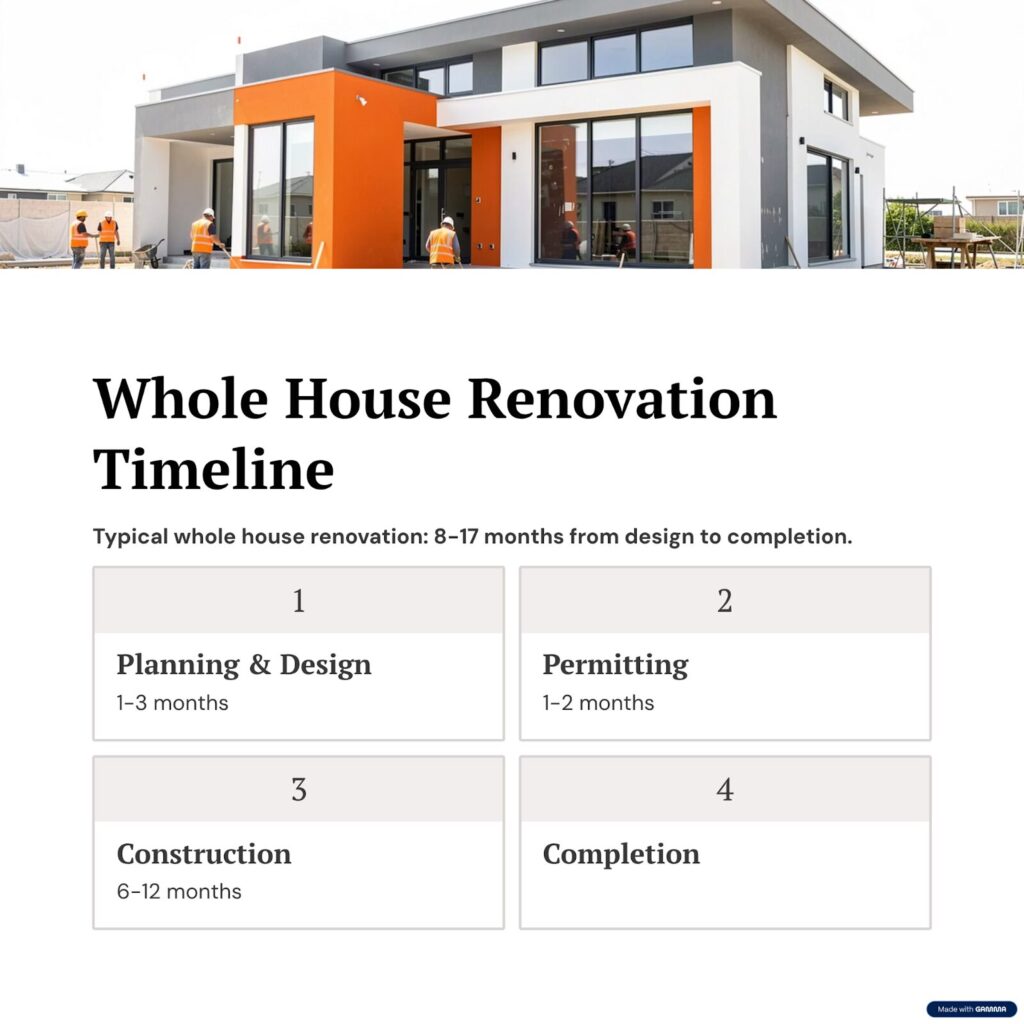
Planning and Design: 1 to 3 months
This phase includes measuring your space, iterative design meetings, and finalizing material selections. We create photorealistic 3D renderings showing exactly how your finished space will look. This investment in planning prevents expensive changes during construction.
For whole house projects, expect the longer end of this range. We’re not just designing one space. We’re creating a cohesive vision that flows throughout your home.
Permitting: 1 to 2 months
Permitting duration varies significantly by jurisdiction. Simple projects might clear in two weeks, while complex additions involving site work can require six weeks or more.
Fairfax County advertises three-week review times, but real-world timelines for projects involving land disturbance often extend to four to six weeks when accounting for administrative processing. Arlington County offers an “Express” track (approximately two business days) for minor work, but major renovations requiring zoning review can take two weeks or longer.
If your project involves a historic district in Old Town Alexandria or requires Health Department approval for septic systems in Western Loudoun, add additional time for these specialized reviews.
Construction Phase:
- Kitchen/Bath Only: 6 to 12 weeks
- Multiple Rooms with Minor Structural Changes: 3 to 6 months
- Whole House with Additions: 6 to 12 months
- Complete Gut Renovation: 8 to 15 months
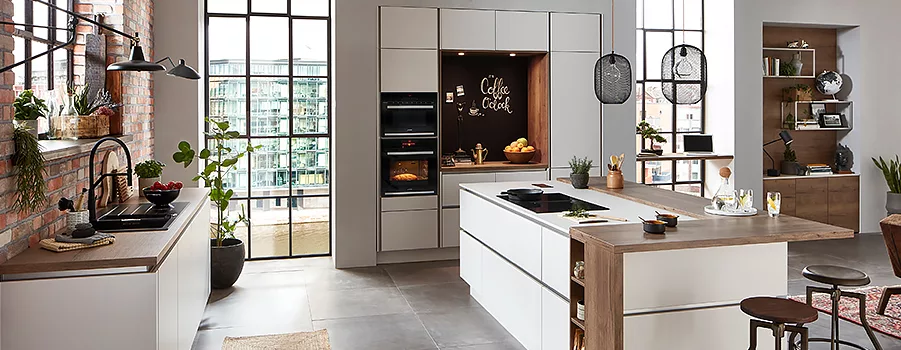
Supply chain considerations significantly impact timing. If you’re selecting German kitchen systems (which we offer through brands like Leicht and Kuchen), cabinetry is made-to-order overseas and requires 12 to 16 weeks for shipping. Demolition shouldn’t begin until major materials are stateside to avoid leaving you without functional spaces for months.
Living Through Renovation
For comprehensive whole house projects, you’ll need to decide whether to remain in your home or relocate temporarily. We’ve managed both scenarios:
Staying in Your Home: For projects that don’t involve every room simultaneously, we can phase work to maintain livable spaces. This approach extends the timeline but eliminates moving costs and disruption. We implement dust control barriers, protect HVAC systems, and maintain daily cleanup protocols.
Temporary Relocation: If the entire house requires work simultaneously, temporary housing (typically three to six months for major renovations) allows faster project completion. This eliminates the need for phased construction and reduces overall timeline by 20% to 30%.
Navigating Northern Virginia’s Permitting Process
Each jurisdiction in our region operates with distinct processes, timelines, and enforcement priorities. Understanding these requirements prevents “Stop Work” orders and complications during resale.
Fairfax County
Fairfax County manages permits through the PLUS (Planning and Land Use System). The county advertises review times up to three weeks for residential building permits, though this excludes administrative processing time. Real-world timelines for complex additions typically extend to four to six weeks.
Projects involving land disturbance over 2,500 square feet (common for large additions or detached garages) require grading plans. Fairfax enforces strict regulations regarding Resource Protection Areas (RPAs) near water. New fee schedules effective July 2025 increased costs for code academy surcharges and site revisions.
Key Consideration: If your property touches an RPA, expect additional environmental review and potential mitigation requirements that add time and cost to your project.
Arlington County
Arlington County offers two permit tracks:
Express Track: Approximately two business days for minor interior alterations and small decks.
Route Through: Major renovations, additions, and new construction require five to ten business days for review, though zoning complications for height or lot coverage can extend this timeline.
Arlington requires a Water Quality Impact Assessment for properties touching RPAs. All exterior work requires a certified house location plat showing easements. This is a document many homeowners of older properties don’t have readily available.
Critical Detail: Arlington enforces strict lot coverage limits. Adding a large patio or driveway extension can inadvertently exceed allowable impervious surface, triggering expensive stormwater mitigation systems.
Loudoun County
Loudoun County’s LandMARC system differentiates review times based on project scope and location (Town vs. County):
Simple projects like decks or finished basements often receive review in two to five business days. Custom homes or large additions fall into a 15-day review bucket for building permits and ten days for zoning.
Unique Requirement: For properties on private well and septic (common in Western Loudoun), any addition increasing bedroom count requires Health Department approval before building permits issue. The department must verify septic system capacity is sufficient for increased occupancy.
Historic Districts
Homeowners in Old Town Alexandria or Arlington’s Maywood district face an additional oversight layer: the Board of Architectural Review (BAR).
The “Old and Historic Alexandria District” mandates that any exterior alteration visible from public streets or alleys requires a Certificate of Appropriateness. This covers window replacements, paint colors, siding materials, and more. The BAR evaluates projects based on historical accuracy and compatibility with surrounding structures.
Modern materials like vinyl siding or composite trim are often rejected in favor of wood, brick, or specific approved substitutes. Design guidelines dictate roof pitches, porch styles, and window fenestration. These aren’t suggestions. They’re enforceable code in historic zones.
Design-Build vs. General Contractor: Which is Right for You?
Your choice of project delivery method significantly impacts cost predictability, timeline, and stress levels. Northern Virginia homeowners typically choose between two approaches:
The General Contractor (Design-Bid-Build) Model
In this traditional structure, you hire an architect to design your project, then put those plans out to bid among general contractors.
How It Works: You hold separate contracts with the architect and builder. The architect acts as your advocate to ensure the builder follows plans.
Advantages: Theoretically allows price competition among builders. Suitable for smaller, strictly defined projects where design is minimal.
Disadvantages: This model often creates an adversarial gap between design and budget. An architect may design a beautiful addition costing $400,000 when your budget is $250,000. “Value engineering” after the fact is expensive and time-consuming. If site conditions change, builders charge change orders for work not specified in plans, leading to finger-pointing between architect and contractor.
We’ve seen this dynamic cause significant frustration for homeowners who end up as project managers coordinating between two professionals with different priorities.
The Design-Build Model
Design-build firms handle both architectural design and construction under one contract. At Boss Design Center, this is our core approach.
How It Works: The architect, designer, and construction manager work as a unified team. Costs are estimated during design, not after.
Advantages:
- Single Point of Accountability: No blame game. If a design element isn’t buildable, we fix it.
- Cost Certainty: Because our construction team prices designs in real-time, projects are designed to budget. This eliminates the risk of receiving bids double your expected cost.
- Streamlined Timeline: Permitting and material procurement begin while final details are resolved. This overlapping reduces total project duration by weeks or months. This is critical in Northern Virginia where permitting queues are long.
Our Experience: For extensive renovations involving structural changes and high-level finishes, design-build offers lower risk. When we establish your design philosophy upfront and select all materials before construction begins, surprises virtually disappear. Our fixed-rate contracts mean the price we quote is what you pay.
Which Approach Fits Your Project?
Choose Design-Bid-Build if:
- Your project is small and well-defined (like a pull-and-replace bathroom)
- You already have architectural plans
- You have time to manage coordination between multiple parties
Choose Design-Build if:
- Your project involves structural changes
- You want cost certainty before committing
- You prefer working with one team throughout
- Timeline efficiency matters
- You value comprehensive planning that reduces surprises
For whole house renovations (which inherently involve complexity, multiple systems, and significant investment), design-build typically provides the most efficient path.
Common Challenges in Northern Virginia Whole House Renovations
The housing stock in our region presents specific technical challenges that can derail budgets and timelines if not anticipated.
Older Home Complications
Many neighborhoods in Arlington (built 1940s-1950s) and parts of Alexandria contain homes with original systems nearing end-of-life. When opening walls for renovation, we frequently encounter:
Galvanized Plumbing: Original galvanized steel water supply lines corrode from the inside out. By the time visible issues appear externally, interior corrosion has reduced water flow significantly. Whole house renovation is the only practical time to replace these with PEX or copper. Budget $8,000 to $15,000 for complete re-piping.
Electrical Capacity: Older homes often have 60-amp or 100-amp service panels. Modern renovations require upgrading service to 200 amps or more. These upgrades add central AC, induction cooktops, EV chargers, and multiple high-draw appliances. This “heavy-up” costs $2,500 to $5,000 but is non-negotiable for supporting contemporary lifestyles.
Hazardous Materials: Homes built before 1978 are presumed to contain lead-based paint. Asbestos frequently appears in 9×9 floor tiles, pipe insulation, and textured ceilings. Professional abatement is legally required before demolition. Budget $3,000 to $10,000 for testing and removal, depending on quantity and location.
Creating Open Concepts in Traditional Layouts
The popular open-concept layout requires removing load-bearing walls in homes with traditional compartmentalized floor plans. This necessitates installing engineered lumber (LVL) or steel beams to carry the load previously supported by the wall.
These beams require proper support, often necessitating new footings in the basement to carry point loads. Structural engineering and permitting add $5,000 to $15,000 to projects, but this work is essential for both safety and code compliance.
Soil and Foundation Considerations
The clay-heavy soil throughout Fairfax and Prince William counties presents challenges for additions. Clay expands when wet and contracts when dry, creating shifting that can crack foundations.
For additions, engineers often specify deeper footings, drainage systems, or soil remediation. These aren’t optional. They’re requirements for stable construction. Budget an additional 10% to 15% for foundation work compared to similar projects in regions with more stable soil.
How to Choose the Right Renovation Partner
Selecting your renovation partner might be the most consequential decision you make in this process. The right team prevents problems; the wrong one creates them.
Essential Credentials
Licensing: Verify your contractor holds appropriate licenses. In Virginia, significant projects require a Class A contractor’s license. Check license status and disciplinary history through the Virginia Department of Professional and Occupational Regulation (DPOR). Maryland and DC have similar verification systems.
Insurance: Confirm your contractor carries General Liability insurance (covering damage to your home) and Workers’ Compensation (covering injuries to their crew). If you hire an uninsured contractor and someone is injured on your property, you face potential liability.
Bonding: Bonded contractors have posted a surety bond that protects you if they fail to complete work or violate contract terms. While not legally required in all cases, bonding provides additional financial protection.
Evaluation Questions
Design Capability: Does the firm have in-house design expertise, or will they subcontract design separately? Integrated design-build firms create more cohesive results with fewer coordination gaps.
Communication Systems: How will you receive updates during construction? We use online project management systems that provide real-time updates, schedules, and communication access. Weekly in-person meetings keep projects on track.
Material Selection Process: Can you see and touch materials before selection, or are you choosing from catalogs? Physical showrooms (we operate locations in McLean and Bethesda) allow you to understand exactly what you’re getting.
Project Manager Assignment: Will you have a dedicated project manager, or will you work with whoever is available? Consistent point of contact prevents miscommunication.
Change Order Policy: How does the firm handle changes during construction? Transparent change order processes with documented pricing prevent disputes.
Reference Checks
Ask for references and be specific with your questions:
- Did they maintain a clean job site with adequate protection for unaffected areas?
- How did they handle unexpected issues or changes?
- Was the final price close to the original bid?
- Did they complete on schedule, and if not, why?
- Would you hire them again?
Ask for contact information for both successful projects and any where problems occurred. How a contractor responds to challenges reveals their character.
Contract Clarity
Fixed Price vs. Time and Materials: For whole house renovations, fixed-price contracts with detailed scope provide the best financial protection. Time-and-materials arrangements can spiral unpredictably.
Draw Schedule: Payment should be tied to milestones, not arbitrary dates. For example: “20% upon signing, 30% upon rough-in completion, 30% upon substantial completion, 20% upon final walkthrough.” This structure ensures payment aligns with work completed.
Change Order Procedures: The contract should specify how changes are requested, priced, and approved. Written documentation prevents disputes.
Frequently Asked Questions
Should I renovate my current home or move to a new one?
The math increasingly favors renovation in Northern Virginia. If you purchased your home when mortgage rates were 3% to 4%, moving to a comparable property at current rates (even if rates have dropped to 5.5% to 6%) significantly increases your monthly housing costs. Transaction costs (realtor commissions, transfer taxes, moving expenses) typically total 7% to 10% of the sale price. For many homeowners, investing that money into renovation creates their ideal home while maintaining their favorable mortgage rate.
Can I stay in my home during a whole house renovation?
It depends on project scope. For renovations addressing most rooms but not requiring every space to be gutted simultaneously, we can phase work to maintain livable areas. This approach works well for families who need to avoid moving costs or have school-age children they don’t want to disrupt. For complete gut renovations where all spaces require work simultaneously, temporary relocation allows faster project completion and eliminates daily construction disruption.
How do I finance a whole house renovation?
Most homeowners use one of three approaches: home equity loans, home equity lines of credit (HELOCs), or cash-out refinancing. Home equity loans provide a lump sum at a fixed rate. HELOCs offer flexibility to draw funds as needed during construction. Cash-out refinancing makes sense if current rates are close to your existing mortgage rate. Some homeowners use personal savings for projects under $200,000. We recommend consulting with a financial advisor to evaluate options based on your specific circumstances.
What happens if you discover problems after demolition?
Unexpected issues emerge in many renovations, especially in homes built before 1980. These include structural damage, outdated wiring, and plumbing problems. With our design-build approach and fixed-rate contracts, we price comprehensively based on thorough pre-construction assessment. If genuine surprises emerge (like discovering extensive termite damage behind walls), we document the issue, explain necessary remediation, and provide transparent pricing for additional work. Our comprehensive planning minimizes these surprises, but when they occur, we handle them as partners, not adversaries.
How do I prepare my home for renovation?
Before construction begins, remove personal items from affected areas and adjacent spaces (dust travels). Disconnect cable/internet services that run through work zones. If you have pets, plan for their care during noisy phases. Create a staging area for contractors’ equipment and materials. We provide detailed pre-construction checklists covering utilities, access arrangements, and space preparation. Our project managers coordinate logistics so you know exactly what to expect.
Will renovation increase my property taxes?
In Virginia, improvements that increase property value can affect assessments, potentially raising property taxes. However, tax increases typically represent a small fraction of the value added. For example, a $300,000 renovation might increase your home’s assessed value by $250,000 to $300,000. At Fairfax County’s current tax rate of $1.125 per $100 of assessed value, this translates to approximately $2,813 to $3,375 annually. This is significant but usually manageable compared to the value created.
Transform Your Northern Virginia Home with Confidence
Whole house renovation represents a significant investment in both time and capital. At Boss Design Center, we’ve guided hundreds of families through this process over the past decade, managing projects from comprehensive kitchen and bath updates to complete home transformations throughout McLean, Bethesda, Arlington, and Fairfax.
Our design-build approach eliminates the coordination stress of managing separate designers and contractors. We establish your design philosophy upfront, create photorealistic renderings showing exactly what you’ll get, and provide fixed-rate contracts that protect you from budget surprises. Our clients stay with their dedicated designer from initial consultation through final walkthrough. There are no handoffs between different team members who don’t understand your vision.
If you’re considering a whole house renovation, we’d welcome the opportunity to discuss your project. Contact us to schedule a complimentary consultation at one of our showrooms in McLean or Bethesda, or we can meet at your home to assess your space and discuss possibilities.
McLean Showroom
1389 Chain Bridge Rd, McLean, VA 22101
(703) 382-1222
Bethesda Showroom
7220 Wisconsin Ave Suite 110, Bethesda, MD 20814
(301) 200-9991Visit bossdesigncenter.com to explore our portfolio and learn more about our process.
AUTHOR