Choosing the right kitchen remodeling contractor in Virginia comes down to a handful of verifiable criteria: proper licensing, a documented track record, transparent contract terms, and a clear process for managing your project from start to finish.
At Boss Design Center, kitchen remodeling makes up 80% of our current work across Northern Virginia, and the questions we hear most from homeowners usually come after they’ve already had a frustrating experience with another contractor.
This guide breaks down exactly how to choose the best kitchen remodeling contractor in Virginia, using criteria you can verify before you sign anything.
Verify Licensing and Insurance Before Anything Else
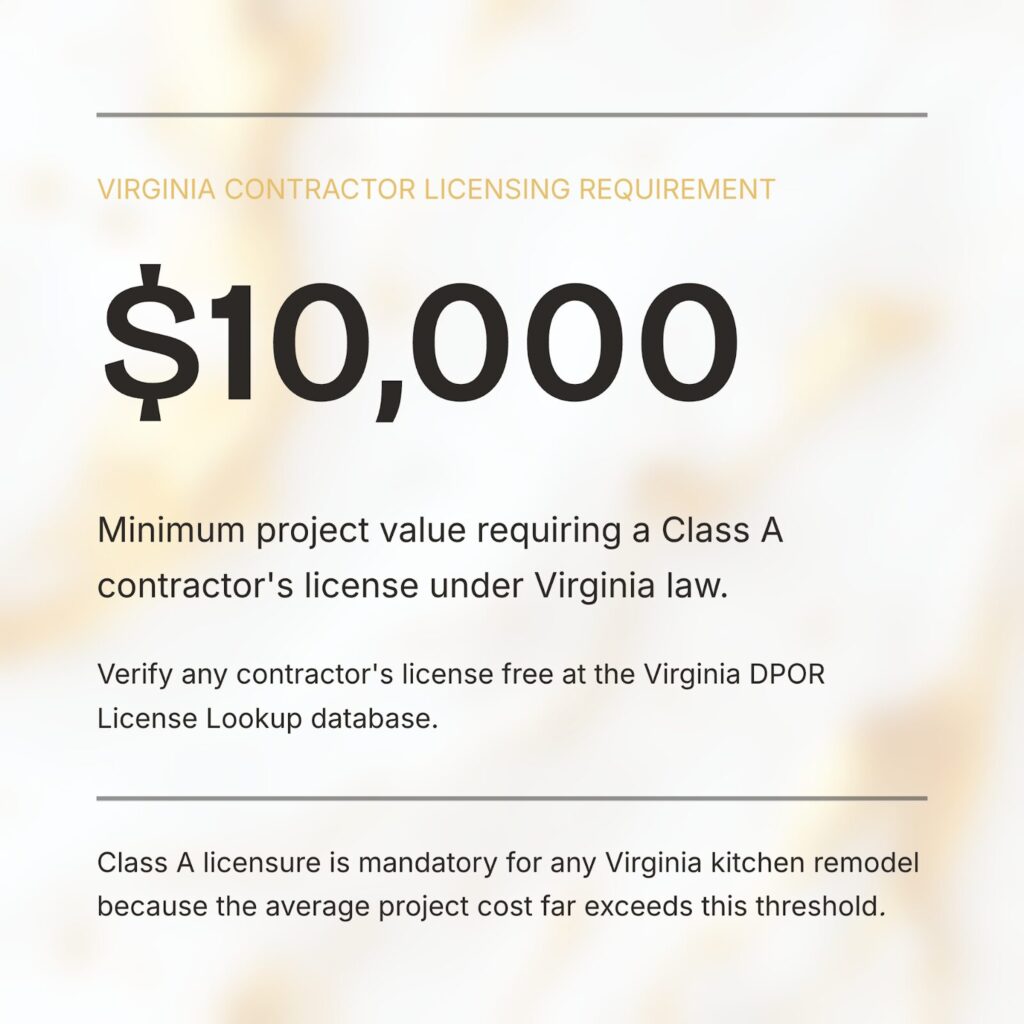
In Virginia, any contractor working on a project valued over $10,000 must hold a Class A contractor’s license. You can verify any contractor’s license directly through the Virginia Department of Professional and Occupational Regulation (DPOR) License Lookup database. It’s free and takes about two minutes.
Beyond the license, confirm they carry both general liability insurance and workers’ compensation coverage. General liability protects your property if something is damaged during the project. Workers’ comp protects you from liability if a worker is injured on your property. Ask for certificates of insurance, not just verbal confirmation.
A contractor who hesitates to share their license number or insurance certificates is worth walking away from.
Contractor vs. Design-Build Firm: What’s the Difference?

Most Virginia homeowners start their search looking for a “kitchen contractor,” but the model you choose shapes the entire experience.
The traditional approach involves hiring a designer separately, getting plans drawn up, then going out to bid with contractors. Each party has their own contract, their own interpretation of the design, and no shared accountability.
A design-build firm handles both design and construction under one roof. Your designer, project manager, and construction crew are all part of the same company. This matters for a few practical reasons:
- Communication: There’s no gap between what was designed and what gets built.
- Cost accuracy: Designers who understand construction costs estimate more accurately from the start.
- Accountability: One company is responsible for everything. If something needs to be addressed, you have one call to make.
At Boss Design Center, we’re a design-build company serving Northern Virginia kitchen remodeling clients, which means you’re not coordinating between separate parties or hoping your designer and builder are reading the same drawings.
How to Evaluate a Contractor’s Experience
Years in business matters, but it’s not the whole picture. A contractor who has been around for 15 years doing mostly bathroom work and commercial flooring has a different skill set than one focused primarily on kitchens.
Ask specifically:
- How many kitchen remodels have you completed in the past two years?
- Can you show me photos of projects similar in scope to mine?
- Are you familiar with local permitting requirements in my county or city?
Virginia’s permitting and inspection processes vary by county and city. A contractor who regularly pulls permits in Fairfax County works within a different system than one operating primarily in Arlington or Alexandria. Local familiarity matters more than most homeowners realize.
How to Read Reviews Properly
A 4.8-star rating with 12 reviews tells you less than a sustained track record over several years. When reading reviews on platforms like Houzz, Angi, or the BBB, look for patterns rather than individual data points.
Positive patterns to look for:
- Multiple reviews confirming the project finished on time and on budget
- References to consistent communication during construction
- Repeat clients who returned for additional projects
Red flags:
- Repeated complaints about missed deadlines or unresponsive communication after the deposit
- Defensive company responses rather than solution-oriented ones
- Reviews that all appear within a short window or sound identical in tone
It’s also worth asking contractors for two or three references from projects completed in the past 12 months. Call them. Ask specifically about what happened when something went wrong, because something usually does in a kitchen remodel, and how a contractor handles it tells you more than the projects that went smoothly.
What to Look for in the Contract
This is where most homeowners get surprised. Two bids for the same kitchen can look similar on the surface and be completely different in practice.
The allowance problem

Many contractors use allowances in their contracts, which are placeholder amounts for items you’ll select later. The contract might say “$8,000 allowance for countertops,” but when you’re midway through the project you find that the countertops you want cost $12,000. That’s a $4,000 change order you didn’t anticipate.
A fixed-rate contract with complete material selection upfront eliminates this. Every detail (cabinet style and finish, countertop material and edge profile, backsplash tile, flooring, hardware, fixtures) is chosen before construction begins. The price you sign is the price you pay.
Payment structure
Be cautious of any contractor requiring a large upfront payment before work begins. A reasonable structure involves a smaller deposit to start the design phase, another deposit when the construction contract is signed, and progress payments tied to project milestones.
Warranty terms

Ask what’s covered and for how long. A reasonable minimum for workmanship is one year. For structural work, five years is a better benchmark. Get the warranty terms in writing as part of the contract.
Here’s what to look for across the key contract elements:
| Contract Element | What to Look For | Red Flag |
|---|---|---|
| Pricing | Fixed-rate with itemized scope | Allowances or vague line items |
| Payment schedule | Milestone-based, small upfront deposit | Large deposit before work begins |
| Scope of work | Every detail specified in writing | General descriptions only |
| Timeline | Start and end dates included | No specific dates given |
| Warranty | Written, 1–5 years on workmanship | Verbal only, or excluded |
| Permits | Contractor pulls all permits | Homeowner responsible |
Who Actually Manages Your Project During Construction?
The design phase might involve the firm’s best designer, but who runs your project once construction starts? This question catches a lot of contractors off guard.
Find out:
- Will I have a dedicated project manager, or will I be calling a general office number?
- How often will I receive updates during construction?
- What’s the process if I have a concern or something needs to change?
At Boss Design Center, clients meet weekly with both a project manager and project coordinator during construction. We also provide access to an online system for real-time project updates. The designer who created your project stays involved through completion.
Most of the frustration in kitchen remodels doesn’t come from bad workmanship. It comes from not knowing what’s happening in your own home.
What a Good Portfolio Actually Tells You

Don’t just look for kitchens you find aesthetically appealing. Look for evidence that the contractor can handle the specific complexity of your project.
If your kitchen involves structural changes, look for portfolio projects that include layout modifications. If you want custom cabinetry, verify they’ve executed custom work, not just stock cabinet installs. If your home has a specific architectural character, check whether their portfolio shows range or whether every kitchen looks the same.
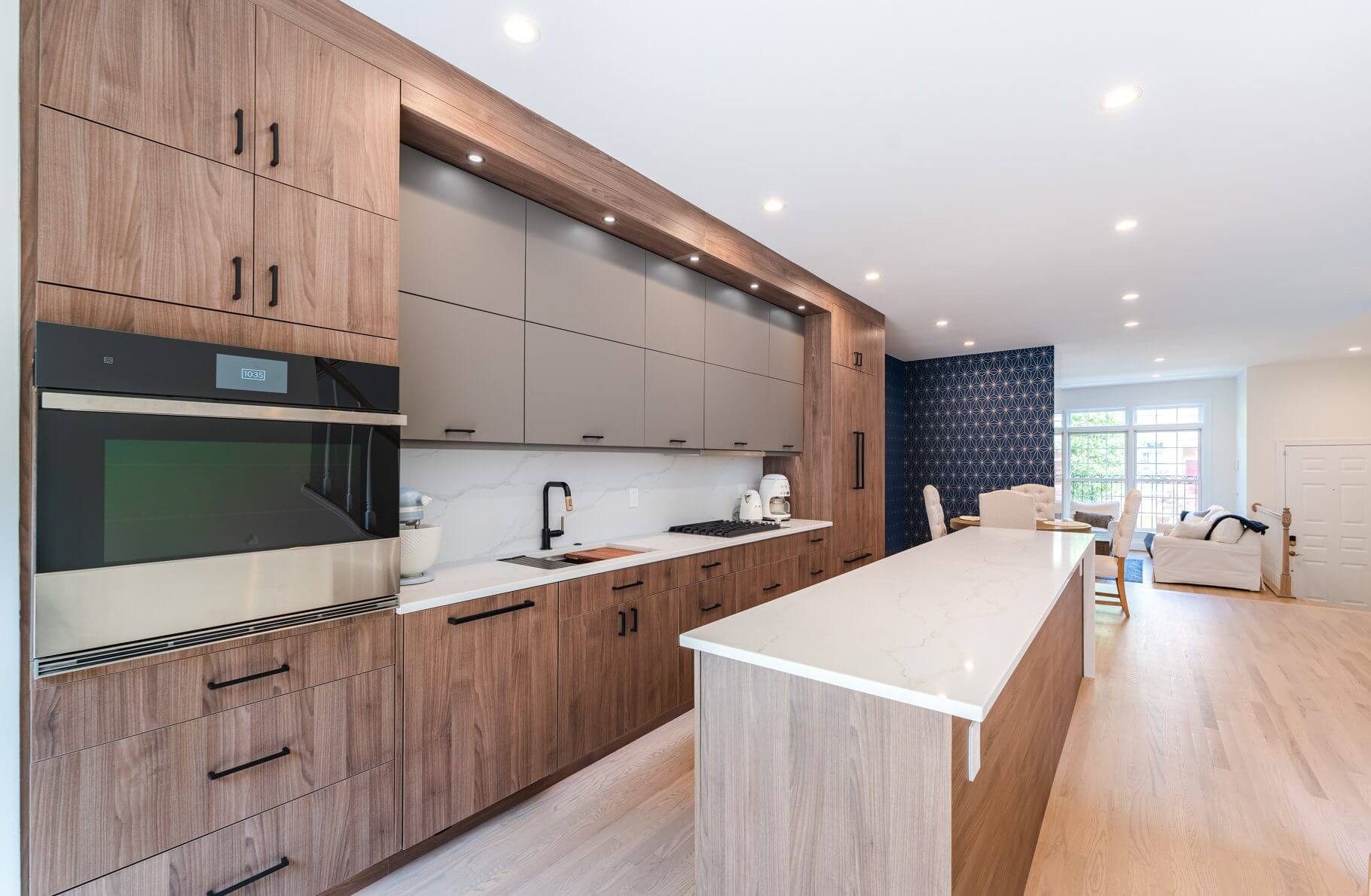
Photorealistic 3D renderings provided before construction begins are another useful signal. A contractor willing to invest in detailed pre-construction visuals is committed to alignment before the work starts. You can browse our kitchen design portfolio to see completed projects across Northern Virginia.
A Quick Checklist Before You Sign
Before committing to any kitchen remodeling contractor in Virginia:
- [ ] Verified active Class A contractor’s license via the Virginia DPOR License Lookup database
- [ ] Confirmed general liability and workers’ comp coverage (certificates in hand)
- [ ] Reviewed portfolio for projects similar in scope and style to yours
- [ ] Called at least two recent references
- [ ] Compared at least three itemized written estimates
- [ ] Reviewed contract for fixed pricing vs. allowances, payment milestones, written timeline, and warranty terms
- [ ] Confirmed who manages the project during construction and how communication works
If you’re planning a kitchen remodel in Northern Virginia, we offer free in-home consultations with no obligation. We’ll walk through your space, discuss your vision and budget, and explain exactly what our process looks like. Schedule a consultation with Boss Design Center.
AUTHOR